Six individuals submitted four site inspection reports for Tawatinaw Natural Area. While mostly consistent, those with a botanical background noted significant invasive plant species colonization of the area.

On a fantastic fall day, the SAPAA Field Trip – Tawatinaw, October – 2024 occurred. Six individuals (attempted) to visit the two parcels of land. Unfortunately, due to a thick under story, on a few hundred metres was possible. Two alternative access points have been identified for future trips.
Two Undisturbed Viewpoints. The team had two very different perspectives on the state of the West parcel. To the untrained, it seemed to have been undisturbed with only a single track from the range road. For the botanists, they noted significant colonization of by invasive plant species. This speaks to the importance of a well-rounded team in conducting these trips.
Compared and Individual Site Inspection Reports
Four different site inspection forms were submitted which are presented below. See this cross comparison as well of the four reports: 2024-10-07 Compared Site Inspection Reports.
While most of the observations and comments were consistent, the Naturalness score ranged from a low of 2 to a high of 4 with a solid average of 3. The presence of invasive plant species accounted for the different perspectives.
Inspection Report: 2024-10-07: Tawatinaw NA; Susan N
| Question | Q## | Response |
| General Information | ||
| Date/Site/Submitter: | Q21/22/12 | 2024-10-07: Tawatinaw (NA; Susan N |
| Guest Names | Q14 | Susan Neuman |
| SAPAA Member | Q16 | No |
| Over all Impression of the Site | ||
| What is the Naturalness of the Site? 4=Great, 0=Terrible | Q31 | 2 |
| How Natural?: comments | Q32 | The site was “natural” in the sense that there were no obvious incursions by OHV’s or other motorized vehicles. However, the sheer number of invasive weeds (thistle and invasive grasses – including reed canary grass) was quite appalling. |
| How was your visit to the PA? | ||
| Trip Duration | Q41 | 1-2 hours |
| Why Did you Go? | Q42 | Visit nature, Plant identification, PA Site inspection for SAPAA |
| Visit Details | Q43 | We entered the western parcel of the natural area on it’s eastern edge from Range Rd 232. Our ingress was on an animal track about 2.0km south of the intersection with Township Rd 614. We proceeded in a westerly direction through thick forest and meadows until we came upon a creek bed with riparian vegetation. We then returned to our starting point, traveling on a slightly different path. Total distance traveled was approximately 1.0km (500 metres in, 500 metres out). |
| What is in the Site? | ||
| Ease to Visit | Q51 | None of the Above |
| Biological Observations | Q52 | A rare native plant (S3) was found in three different locations: Lactuca biennis. (Observations have been uploaded to iNaturalist.) Some interesting riparian plants were also found in the creek bed, which was muddy but not submerged when we visited. Identification of those species in ongoing. |
| Submissions to iNaturalist | Q53 | Yes |
| Geological Observations | Q54 | |
| Designation as a Protected Area | Q55 | None Noted |
| Comments | Q56 | |
| Human Activities/Disturbances | ||
| Agricultural Activities | Q61 | None noted |
| Resource extraction | Q62 | None Noted |
| Motorized disturbances (ATV or vehicle activity). | Q63 | None Noted |
| Animal or self propelled activities | Q64 | None Noted |
| Gathering and Dumping Activities | Q65 | None Noted |
| Infrastructure encroachment | Q66 | None Noted |
| Comments | Q67 | Evidence of deer scat, and possibly animals lying down as a group in the long grass (thereby flattening an area). |
| What Needs to be Done? | ||
| Remediation/Protection Activities Needed | Q71 | Fencing, Invasive Weed Removal, Signs |
| What Have you Done Recently to Help the site? | Q72 | Visit and Submitted This Report! |
| Nearby Stewards? | Q73 | |
| Comments | Q74 | For such an “unvisited” site, the encroachment of invasive plant species was quite horrendous. If seeds are blowing in from surrounding properties, it’s not clear how such invasive species can be kept away from, and controlled within, the natural area. |
| Last Words | Q82 |
Inspection Report: 2024-10-07: Tawatinaw (NA); Patsy C.
| Question | Q## | Response |
| General Information | ||
| Date/Site/Submitter: | Q21/22/12 | 2024-10-07: Tawatinaw (NA); Patsy C. |
| Guest Names | Q14 | |
| SAPAA Member | Q16 | Yes |
| Over all Impression of the Site | ||
| What is the Naturalness of the Site? 4=Great, 0=Terrible | Q31 | 3 |
| How Natural?: comments | Q32 | Area sampled was NE corner of southwestern portion of NA, consisting of relatively open upland mixed forest and open depressional areas with scatered willow and large expanses of marsh reedgrass, with greater or less amounts of Canada thistle and nettle. Because Canada thistle is non-native, this portion of the NA can only be rated as a 3 at most. |
| How was your visit to the PA? | ||
| Trip Duration | Q41 | 1-2 hours |
| Why Did you Go? | Q42 | PA Site inspection for SAPAA |
| Visit Details | Q43 | Objective was to assess the accessibility of the site and its naturalness, and develop a vascular plant species list. Of note were approximately 20-25 plants of the S3 species tall lettuce (Lactuca biennis) in fruiting condition in scattered populations in most areas of the forest. Also of note were very large populations of bracted honeysuckle, especially in the easternmost forest Were it not for the Canada thistle, the site might have rated a 4. 68 species were recorded on this date. The site included s dried-up, muddy gully which was productive of more riparian species. The liverwort Marchantia polymorpha was observed in this gully. Access was very difficult, with a minimal trail that was wet and difficult to navigate with fallen wood. Hence we were able to cover only a very small area. Access from the cutline to the north heading south might have provided better access to western portions, |
| What is in the Site? | ||
| Ease to Visit | Q51 | No Amenities |
| Biological Observations | Q52 | Difficult to find (need Google directions) and access also tedious. |
| Submissions to iNaturalist | Q53 | Yes |
| Geological Observations | Q54 | |
| Designation as a Protected Area | Q55 | Signage |
| Comments | Q56 | Northeastern portion of the NA was not accessible. An interesting site because of the presence of relatively large populations of tall lettuce, and deserves a spring/summer visit, but difficulty of access makes it difficult to do a full survey. |
| Human Activities/Disturbances | ||
| Agricultural Activities | Q61 | None noted |
| Resource extraction | Q62 | None Noted |
| Motorized disturbances (ATV or vehicle activity). | Q63 | None Noted |
| Animal or self propelled activities | Q64 | None Noted |
| Gathering and Dumping Activities | Q65 | None Noted |
| Infrastructure encroachment | Q66 | None Noted |
| Comments | Q67 | Presence of Canada thistle may be due to surrounding agricultural activities and may have been tracked in by wildlife. The moist, open areas provide very suitable habitat for Canada thistle and are also where wildlife bed down. |
| What Needs to be Done? | ||
| Remediation/Protection Activities Needed | Q71 | Invasive Weed Removal, Other (see comments, Q74) |
| What Have you Done Recently to Help the site? | Q72 | Visit and Submitted This Report! |
| Nearby Stewards? | Q73 | Possibly, as there is a residence nearby. |
| Comments | Q74 | |
| Last Words | Q82 | A minimal, maintained trail system for access and monitoring would be desirable but is likely not cost-effective given the amount (lack of) of public usage it receives. |
Inspection Report: 2024-10-07: Tawatinaw (NA); Hubert T.
| Question | Q## | Response |
| General Information | ||
| Date/Site/Submitter: | Q21/22/12 | 2024-10-07: Tawatinaw (NA); Hubert T. |
| Guest Names | Q14 | |
| SAPAA Member | Q16 | Yes |
| Over all Impression of the Site | ||
| What is the Naturalness of the Site? 4=Great, 0=Terrible | Q31 | 4 – Great |
| How Natural?: comments | Q32 | No trails or other human access apparent in the Western part of the NA. |
| How was your visit to the PA? | ||
| Trip Duration | Q41 | 1-2 hours |
| Why Did you Go? | Q42 | Visit nature, Plant identification, PA Site inspection for SAPAA |
| Visit Details | Q43 | Entered the NA about 440 m South of the Northeastern corner of the Eastern portion of the NA on RR 232; penetrated about 230 m to the West from there; initially followed a moose trail, then bushwhacking on moist ground. |
| What is in the Site? | ||
| Ease to Visit | Q51 | Other (see comments, Q52) |
| Biological Observations | Q52 | Observation of about 20 tall blue lettuce (Lactuca biennis) plants which is rare plant in Alberta with S3 designation. Heavy infestation with Canada thistle noted. |
| Submissions to iNaturalist | Q53 | Yes |
| Geological Observations | Q54 | |
| Designation as a Protected Area | Q55 | Other (see comments) |
| Comments | Q56 | Alberta Government sign at the Northeastern corner; Natural Area set up as a memorial to W. N. Simmons for his efforts to preserve the area for the protection of wildlife. |
| Human Activities/Disturbances | ||
| Agricultural Activities | Q61 | None noted |
| Resource extraction | Q62 | None Noted |
| Motorized disturbances (ATV or vehicle activity). | Q63 | None Noted |
| Animal or self propelled activities | Q64 | Not Applicable |
| Gathering and Dumping Activities | Q65 | None Noted |
| Infrastructure encroachment | Q66 | None Noted |
| Comments | Q67 | |
| What Needs to be Done? | ||
| Remediation/Protection Activities Needed | Q71 | Continued Monitoring |
| What Have you Done Recently to Help the site? | Q72 | Visit and Submitted This Report! |
| Nearby Stewards? | Q73 | Try to obtain information about neighbouring landowners to get permission for access to the Eastern portion of the NA |
| Comments | Q74 | |
| Last Words | Q82 | two observations submitted to iNaturalist |
Inspection Report: 2024-10-07: Tawatinaw (NA); Phrank P.
| Question | Q## | Response |
| General Information | ||
| Date/Site/Submitter: | Q21/22/12 | 2024-10-07: Tawatinaw (NA); Phrank P. |
| Guest Names | Q14 | |
| SAPAA Member | Q16 | Yes |
| Over all Impression of the Site | ||
| What is the Naturalness of the Site? 4=Great, 0=Terrible | Q31 | 3 |
| How Natural?: comments | Q32 | Access to the parcels may make them undisturbed. More knowledgeable individuals noted considerable invasive plant species. Not being a botanist, I will go with what I know and observed. |
| How was your visit to the PA? | ||
| Trip Duration | Q41 | 1-2 hours |
| Why Did you Go? | Q42 | PA Site inspection for SAPAA |
| Visit Details | Q43 | Part of the SAPAA field trip to the area. |
| What is in the Site? | ||
| Ease to Visit | Q51 | No Amenities |
| Biological Observations | Q52 | East Parcel: A driving survey could find no way to access the East parcel without landowner permission. West Parcel: Accessible from RR 232, south of TWP 614. |
| Submissions to iNaturalist | Q53 | No, did not see anything of note |
| Geological Observations | Q54 | Numerous depressions filled with water noted in the West Parcel. |
| Designation as a Protected Area | Q55 | Signage, Fencing |
| Comments | Q56 | A memorial sign was posted for Williams Simmons. |
| Human Activities/Disturbances | ||
| Agricultural Activities | Q61 | None noted |
| Resource extraction | Q62 | Oil/Gas wells |
| Motorized disturbances (ATV or vehicle activity). | Q63 | None Noted |
| Animal or self propelled activities | Q64 | Hiking Trails |
| Gathering and Dumping Activities | Q65 | None Noted |
| Infrastructure encroachment | Q66 | None Noted |
| Comments | Q67 | Difficult to assess infrastructure in the site due to limited penetration and access. |
| What Needs to be Done? | ||
| Remediation/Protection Activities Needed | Q71 | Signs |
| What Have you Done Recently to Help the site? | Q72 | Visit and Submitted This Report! |
| Nearby Stewards? | Q73 | |
| Comments | Q74 | The local fish and game association is a likely steward. |
| Last Words | Q82 | The route map shows two hiking icons which I will try next visit. For the West parcel, it is from TWP 614 and roughly south of RR 233. For the East parcel, it is the terminus of RR 230 south of TWP 615. |
Images from Inspection
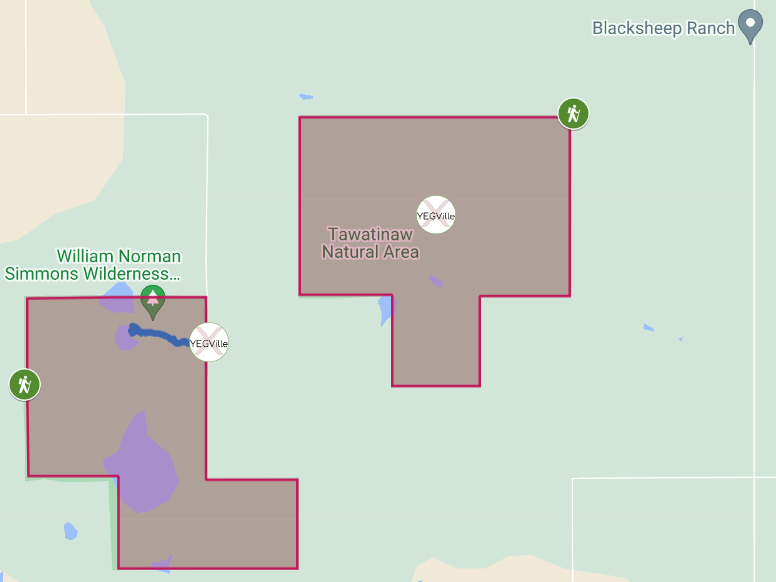
Phrank’s route map (blue) and possible access points (green hikers). 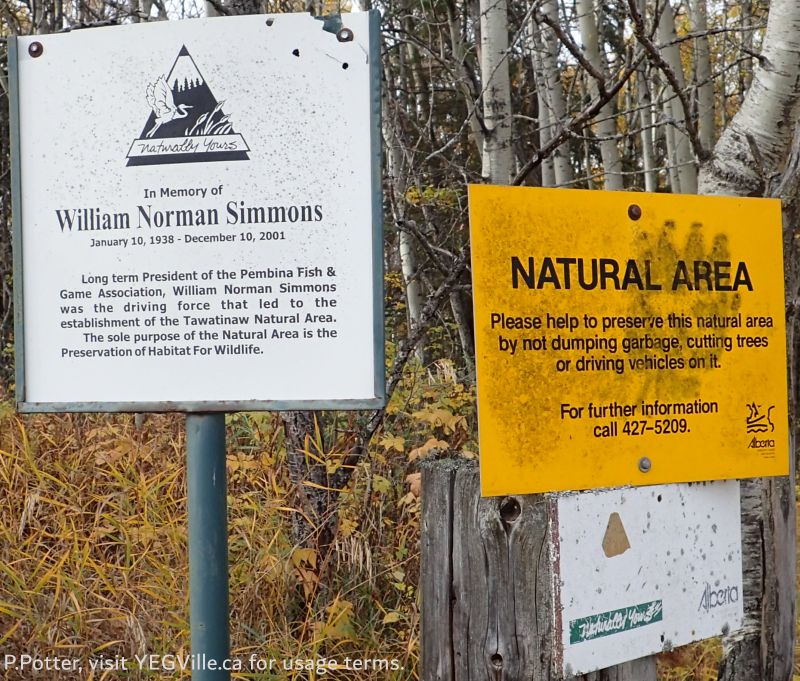
Three signs in the NE corner corner of the West-parcel of the NA, Tawatinaw NA, 2024-10-07, P. Potter. 
Manna demonstrates the height of ‘tall lettuce’ in the site, Tawatinaw NA, 2024-10-07, P. Cotterill. 
Team making its way through the tall grass, Tawatinaw NA, 2024-10-07, P. Cotterill. 
Overview of iNaturalist postings, Tawatinaw NA, 2024-10-07, Susan ENPS. 
Overview of iNaturalist postings, Tawatinaw NA, 2024-10-07, Susan ENPS. 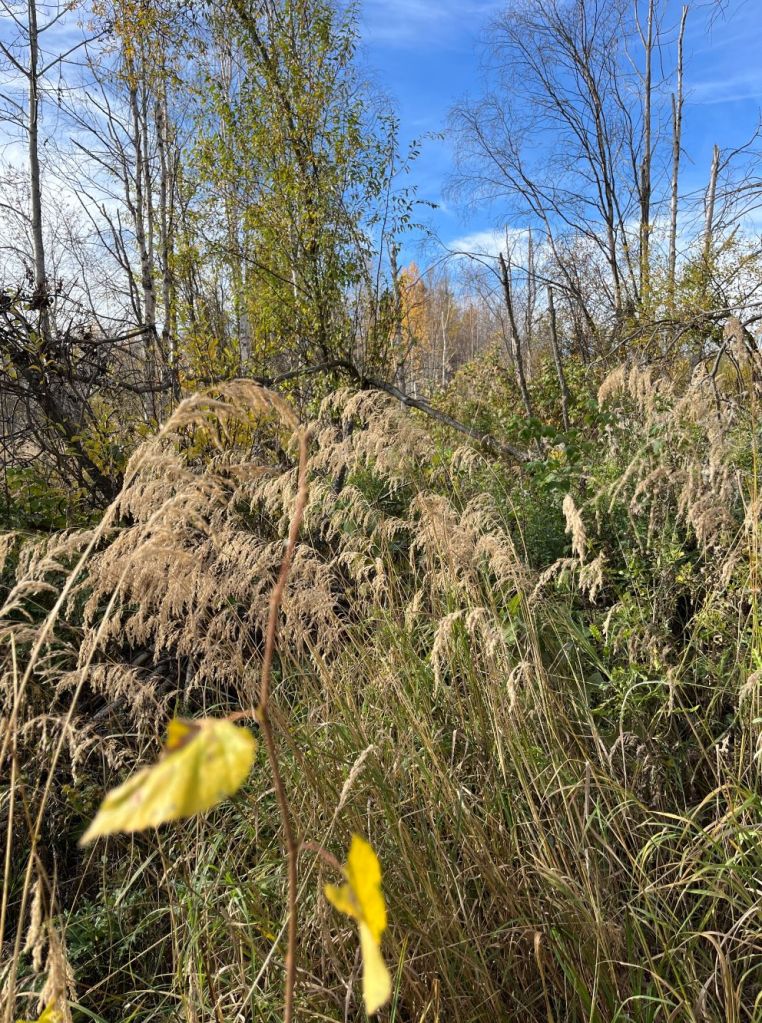
Wetland with Birch, Tawatinaw NA, 2024-10-07, P. Cotterill. 
Marchantia polymorpha liverwort, Tawatinaw NA, 2024-10-07, P. Cotterill. 
Bracket fungi, Tawatinaw NA, 2024-10-07, P. Cotterill. 
Tall Lettuce, Tawatinaw NA, 2024-10-07, P. Cotterill. 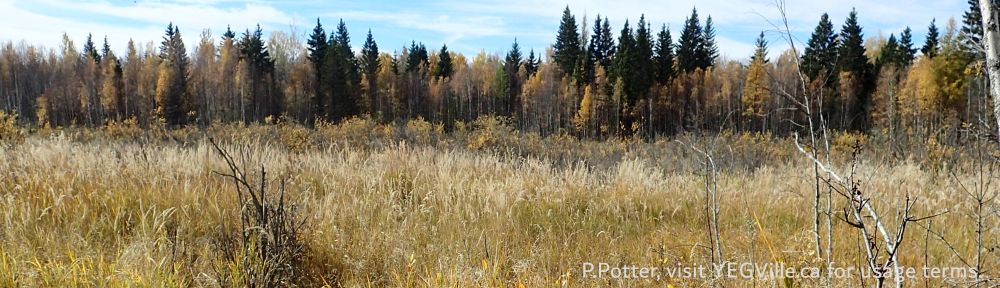
Looking SW across one of the two small ponds in the area, Tawatinaw NA, 2024-10-07, P. Potter. 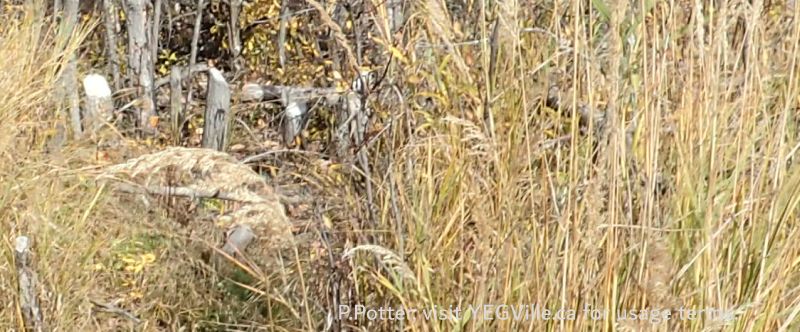
Looking north along a beaver run and at their handy work, no recent activity noted, Tawatinaw NA, 2024-10-07, P. Potter. 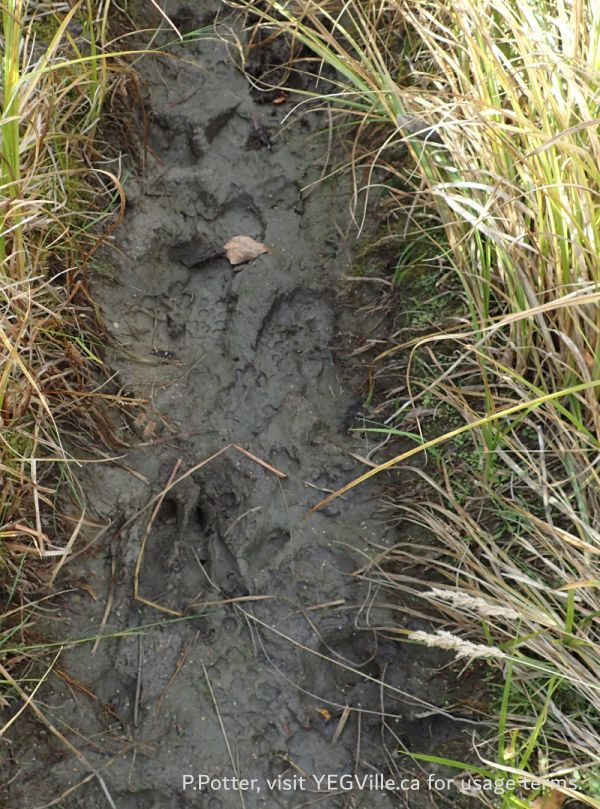
Moose and human tracks in a beaver run, Tawatinaw NA, 2024-10-07, P. Potter. 
Looking East across private land to the Eastern parcel of the NA; the nearest we got to it, Tawatinaw NA, 2024-10-07, P. Potter. 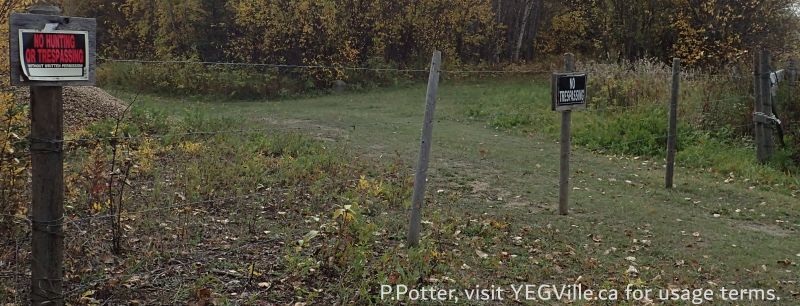
End of TWP 613 and access to the East-parcel of the NA, Tawatinaw NA, 2024-10-07, P. Potter. 
Tawatinaw NA aspen woods 2023-10-13 PCotterill 
Tawatinaw NA view from roadside 2023-10-13 PCotterill
 SAPAA
SAPAA 
Pingback: 2024-10-07: Nestow – Field Trip | SAPAA