SAPAA collaborates with post-secondary institutions to enhance programmatic goals and student learning through a structured project management framework. Utilizing a Seven Successes model, SAPAA prioritizes effective project selection and grant management, while researching site inspection practices and updating web style guides, ultimately aiming for organizational growth and sustainability.
The Stewards of Alberta’s Protected Areas Association (SAPAA) partners with post-secondary institutions to advance SAPAA’s programmatic objectives and to provide a best in class learning opportunity for the students.
Conceptual Framework to Run Projects
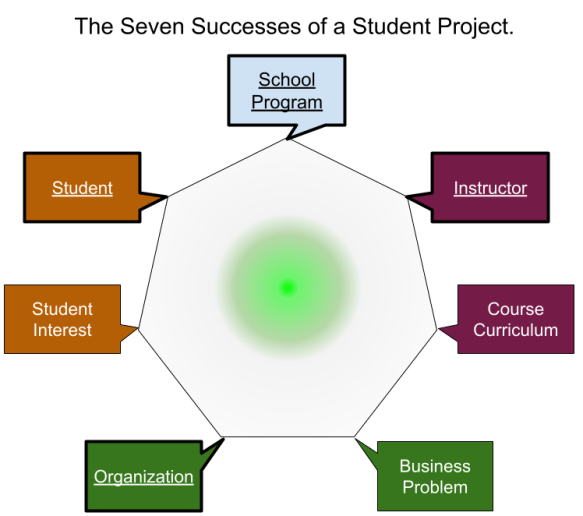
SAPAA uses the Seven Successes model to manage its student projects. The model recognizes that a successful experience balances the needs of the organization (SAPAA), the curriculum objectives of the instructor, and the course and career needs of the student. Underpinning this model is an effective programmatic structure offered by the institution.
How SAPAA Runs Projects
SAPAA is careful selecting its projects because it invests considerable time and effort in the students. SAPAA treats its student team as a consulting firm that it has contracted:
- One Neck to Choke. Single project manager selected by the team.
- Let’s Talk. Students juggle many priorities. We can discuss scope or pivot.
- Think Resume, Not Grade. Grades are important, employment more so.
Current Projects Available
The following are SAPAA’s business problems/opportunities SAPAA for 2025 and early 2026. All are open to adjustment to best fit course curriculum or student interests.
Best Practices in Grant Management
- WHAT: SAPAA has traditionally relied on membership dues to fund its very modest operations. Compliance with a Volunteer Safety Program can be enhanced by paying honorariums and defraying costs. Funding required is the subject of another project but is anticipated in the $20,000 to $50,000 annually. Grants and donations are a potential source of funds for this expenditure.
- DELIVERABLE(S):
- What funding opportunities are there in general for environmental organizations such as SAPAA?
- How well do these opportunities align with the proposed Volunteer Site Inspection program?
- Using best effort, what is the anticipated ‘Win-Rate’ for apply to the best prospects noted above?
- Considering all of the above, is there funding available and should SAPAA ‘bother’ pursuing its proposed program and/or what changes are needed to increase the likelihood of success?
- DETAILS:
- What are best practices for applying for, complying with, and reporting/closing grants, etc.
- Design a Grant Management Life cycle program based on the above for SAPAA.
- Analyze the components of the above process and identify the requisite People, Process, and Technology using existing SAPAA volunteers and technology.
- Recommend process enhancements to the above categorized by readiness to implement, cost, skills needed, etc.
- RESUME FODDER: If successful, the following Value Adds are possible:
- Present findings of the above to a Chartered Professional Accountant seminar for nonprofits.
- Present findings of the above to a community of practice of Organizational Stewards
- Potentially inform the responsible Minister of the costs and challenges of running an OHS compliant Volunteer program.
2026 Minister’s Report
- WHAT: For the third year in a row (see the 2024 and 2025 reports), SAPAA will provide to the responsible provincial Ministers a report on the state of Alberta’s protected areas. This project will help in the analysis, writing, and potentially presentation of findings.
- DELIVERABLE(S): Assist in the creation of the 2025 Minister’s report
- DETAILS:
- Review the rolling 3-year site inspection data and previous reports and recommend enhancements, changes, and other modifications to the 2026 report.
- Conduct data analysis and generate findings/visuals.
- Assist in the drafting of the report.
- Develop and potentially deliver live and recorded summaries of the report findings.
- RESUME FODDER: Analyzed three years of data to support the findings of a report to provincial Ministers responsible for the environment.
Fall Virtual Conference on Citizen Science Best Practices
- WHAT: In support of Organizational Stewards and advancing relevant knowledge about environmental stewardship, support a virtual conference on Citizen Science.
- DELIVERABLE(S): 90-minute conference and follow up conference proceedings on the good, bad, and ugly of Citizen Science.
- DETAILS: The conference to be organized with the Citizen Science Hub of Alberta and held in the fall of 2025; potential questions to be addressed by the conference include:
- What is CitSci? What is a success story (case study)? Why bother?
- When is something not CitSci (close, but no cigar)?
- How does an organization initiate a Citizen Science project?
- What are the secondary benefits of running a project (understanding, contributing to knowledge, improved grants, attracting volunteers, etc.?)
- How is CitSci supported in Alberta (the hub, the organization)?
- Where to from here, how do we get started?
- RESUME FODDER: Organized a best practice conference on Citizen Science. This event focused on the practical benefits to community organizations.
Research Site Inspection Best Practices
- WHAT: What information can an amateur site inspector reasonably collect?
- What categories of questions (e.g. botanical, disturbances, or social/political) can be collected?
- What do other jurisdictions do when citizens visit public lands submit site inspections?
- These questions will be considered from a best practice lens.
- The team will present findings to the board and other individuals suggested by SAPAA.
- DELIVERABLE(S): Research, analyze, and present findings to answer the question, what can reasonably be expected from volunteer/lay site inspectors.
- DETAILS:
- Working with SAPAA, discuss with the Government of Alberta their information requirements.
- Working with SAPAA, discuss with peer organizations their information requirements.
- Consolidate and analyze results, formulate recommendations for SAPAA’s site inspection questions and process.
- RESUME FODDER: Conducted a best practice survey of citizen-science/stewardship and presented findings and recommendations to a nonprofit engaged in this activity.
Update Web Style Guides
- WHAT: A core asset of SAPAA is its website. It has grown organically and as a result has some variation across its web pages and three different style guides.
- This project will consolidate (or update) the style guides, produce definitive documentation, and test the style guides across existing pages.
- The focus is on ensuring consistent language on the website using practical instruction and guidance.
- Technical knowledge of website development is an asset but not required.
- As such, good writing skills, empathy, and an interest in program design (technical, social, etc.) would be beneficial
- DELIVERABLE(S):
- Review and research best practices for similar websites and audiences.
- Analyze and recommend a final set of style guide(s) for the SAPAA website.
- As time permits, conduct a proof of concept update of some web pages.
- As time permits, host a webinar for peer and interested organizations on the work performed, write a best practice guest blog on myorgbio.org.
- RESUME FODDER:
- Analyzed audiences for a website and evaluated existing style guides in meeting the website goals.
- Recommended and implemented revised style guides using both manual and automated methods including AI.
Data Stores
- WHAT: Currently SAPAA is managing its site inspection data in Google Sheets. What are the non-governmental data systems available that could store protected area related information.
- DELIVERABLE(S): Determine how best to store SAPAA data.
- Conduct a market scan of databases that contain protected area information or similar data.
- Evaluate the databases, using a simple scale to be determined, on their suitability to SAPAA.
- Prepare a report with a summary of findings and present to the board and interested members and peer organizations.
- RESUME FODDER: Conducted a comprehensive market scan of data systems associated with protected areas and evaluated them as to their fit for purpose for managing site inspection data.
 SAPAA
SAPAA 
Pingback: 2025-06-12 Grant MacEwan PM Capstone Introduction | SAPAA
Pingback: 2025 President’s AGM Report | SAPAA