Updates on meeting with GoA Officials, 2024 Site Inspection Training and form, and two student teams. A very busy Spring for SAPAA! Also available in PDF.

- Editorial
- Meeting with Officials from the GoA
- First Minister’s Report on the State of Protected Areas
- SAPAA Site Inspection for 2024
- SAPAA and the University of Alberta Students
- SAPAA Report; A Jurisdictional Scan
- Plan for Parks – Public Input Requested
- Membership
- Editorial Team, Links and Resources at a Glance:
- A Few Bonus Pictures!
Editorial
by Patsy Cotterill
As you can see, the board has been busy this spring, developing initiatives that will influence the direction in which SAPAA will go (for example, engaging the assistance of students in conducting research, further developing the site inspection form and liaising with government Parks staff).
Now that summer has arrived, board members’ personal constraints of time and mobility have not allowed us to visit as many sites and submit reports as we would have liked. This means that we are relying heavily on our steward members to fill in some gaps.
So far, the spring and summer have been cool and moist, resulting in excellent growing conditions (the yellow lady’s slipper orchids in Wagner Natural Area were at their absolute best for the Father’s Day walks!) and our Natural Areas look lush and beautiful. Tell us about them – as well as the challenges of keeping them so!
As always, we invite photos, comments and contributions from our members/ readers.
Meeting with Officials from the GoA
by Patsy Cotterill
At a virtual meeting on June 7, Frank, Hubert, and Patsy met with several Government of Alberta staff members working in Protected Areas (see below for a list).
Commitment Assured. The good news is that although the Volunteer Stewards Program in its original form seems to be passé, with many of the staff originally assigned to it now retired, a new group of staff members, young, competent and technologically savvy, are now looking after our natural areas and their use by the public. They assured us that the government remains committed to the protection of Protected Areas. We were informed that data is being collected on sites through the field staff program, and work continues on installing signage.
Working Relationships. Another promising sign for SAPAA is that staff seem willing to work with us and to maintain a relationship.
Reporting Value. They see value in the site inspection form that we have developed as a report of baseline data to inform a more detailed assessment by staff if required. The government wants to have an idea of the condition of the natural areas and any follow-up action that may be required. This does not of course depart from the original “eyes and ears” function of the Volunteer Stewards Program. They suggest the form needs some tweaking to be more efficient for data collection and use by the target audience. Both Courtney Hughes and Cara Gill offered to review it, with Courtney suggesting it be available on a more standardized app platform.
Future Contributions. Wendy agreed that she would be willing to contribute to our newsletter. Alex was also interested in knowing how we are progressing in our initiative to find partners with SAPAA. We look forward to further feedback and cooperation with the government.
Government staff attending were Alexandra Tait-Miller, Director, Recreation, Land and Ecosystems Management; Wendy Harrison, Land, Ecosystem and Conservation Manager, Lands Delivery and Coordination North; Courtney Hughes, Landscape Ecologist responsible for the Northwest of the Province; and Cara Gill, Landscape Ecologist for the Northeast. (Kristyn Mayner, Research and Science Information Specialist, Office of the Chief Scientist, was able to join briefly.)
First Minister’s Report on the State of Protected Areas
by Frank Potter
Report Retirement. Sometime in late 2023, the site inspection reporting form was retired from the alberta.ca website (See the Wayback Machine). Perhaps just as well, as it is unclear how the information provided was received or used by the Government of Alberta. Results from this form were not made available to the public or to SAPAA.

Proof of Concept. In mid-2023, prior to the Ministry form being retired, SAPAA launched a proof of concept (PoC) Site Inspection Form. Twenty-three sites were visited (out of 248) and lessons were learned on what questions to ask, how to collect/collate the information, and report on the results. SAPAA also initiated its first annual SAPAA Protected Areas Site Inspection Report.
Ministers’ Letters & Report. In mid-May, 2024, letters and this first annual report were sent to the responsible Ministers: Honourable Rebecca Schulz, Minister of Environment. and Protected Areas; and, Honourable Todd Loewen; Minister of Forestry and Parks. Both the letters and the report are available:
Reports Wanted! Both the site inspection form and the report to the Ministers were pilots. We invite all SAPAA members, friends of SAPAA, and affiliates to consider submitting their own reports. These will form the basis for the 2024 Minister’s report developed next winter.

SAPAA Site Inspection for 2024
by Frank Potter
Are You on the List? Further to the previous article, SAPAA has launched its 2024 site inspection form. As a SAPAA member, we are happy to add your name to the list of submitters after you take a short orientation course. Otherwise, you or any member of the public can submit a report as a guest.

Question Training. While the form is largely self-explanatory, two training sessions are planned for July 11 and 13. More will be offered based on interest. To register for these two sessions, please RSVP via: 2024 Site Inspection Training.
Questions about the Questions. The questions are a ‘mashup’ of previous site inspection forms and other sources. The questions have been reviewed by provincial officials and endorsed, at least for 2024.
Questions for 2025. For better or worse, the questions are fixed for 2024. Nevertheless, do you have thoughts or comments for what to add (or take away) in 2025? Ideally, provide your feedback both using the current technology (a web page), or the sky’s the limit (smartphone applications, drones, etc.).
Quick Start 2024 Inspection Notes:
- Not a Volunteer. You are not a SAPAA volunteer while visiting the natural area. SAPAA is not asking you to do this. Nevertheless, if you find yourself in a protected area, please consider sharing your thoughts on it.
- Consider Registering. Do you expect to submit more than 1-2 reports in 2024? Why not register by emailing webmaster@sapaastewards.com. Phrank will add you to the exclusive list!
- Review the Form First. Please read through the form before your first report. For example, if you see an emergency or criminal behaviour, the form is NOT the tool to report this. Definitions for each question can be found here: 2024-Questions | SAPAA (sapaastewards.com).
- Email Photos. Unfortunately, the form does not support photo uploads. Please email them to webmaster@sapaastewards.com.
- Visiting Notes. Feel free to submit a report for each time you visit a site. Nevertheless, SAPAA reserves editorial privileges on how it uses your reports.
Planning for Beyond 2024. No new technologies are planned for 2024 with the focus being on collecting the right information and expanding submissions. Learnings from 2024 will help us design the 2025 process which may include a smart phone application and other cool things… but first the questions!
SAPAA and the University of Alberta Students
by Frank Potter
2-Student Teams. SAPAA utilized two student teams from the University of Alberta (UofA) this past winter/spring. The team descriptions are below but in summary, one team helped SAPAA with a jurisdictional scan of similar organizations with the aim of providing guidance for SAPAA into the future, and another team worked on proof of concept phone applications for site inspections.

The students involved brought great enthusiasm and newly learned skills to their tasks. We hope to keep in contact with them and have them tell the protected areas story. The following article discusses the jurisdictional scan; below are a few notes on the two teams.
Project Summary – Site Inspection Phone Application
- Program: Computer Science 401 Capstone Project. Software Process and Product Management. All phases of software development are reviewed from a process perspective.
- Project Summary: SAPAA wants to understand what benefits and costs a phone-based application would provide.
- Deliverables:
- A ‘working proof of concept’ v2024-Winter.
- An assessment of the viability, benefits, issues, costs, and challenges of adopting a phone-based site inspection tool.
- Thank you to: Sebastian Sekowski (team lead), Aaron Boyd, Bao Nguyen, Kristina Anfilofieff, Martin Mullappallil Johney, and Michael Wolowyk.
- You can also read the student’s biographies.
Results
Proved Concept. A proof of concept application was delivered by the team. More importantly, the project helped us to better understand how a future application could be created. For example, this initial application used the existing site inspection report as its basis. Screens had the user tick boxes. A value-added feature was a map that provided a real-time location for the person doing the inspection.

For the next iteration, the basis of the application will be the map. As a person is walking through a protected area, they can flag items that are part of the site inspection template. For example, unusual plants, illegal dumping, existence of signs, etc.
Costs and Capacity. Another result was understanding of costs and infrastructure to support such an application. Unfortunately, these resources are beyond the capacity of SAPAA to provide in the near future – but now we know the costs!
Working with Dragons
As part of their program, the students presented the application to their class but also were challenged in a “Dragon’s Den” format to defend their design. You can read about what the students faced: Dragons and Protected Areas – April 4, 12-13h | (myorgbio.org).

Jurisdictional Survey Project
- Program: Sociology 291, class project: Sociological examination of the relationship between human societies and the natural environment.
- Project: Assist SAPAA in developing a strategic plan for its next 10 years partly by examining the context of its past and its proposed vision statement.
- Deliverables:
- Prepare a jurisdictional scan of stewardship organizations relevant to the Alberta Government’s Volunteer Stewards program.
- Provide feedback on the proposed vision statement and whether it speaks to the students as individuals and thus is a viable plan.
- Thank you to: Ashlee Vriend, Madeline Mayes, and Sean Hansed.
SAPAA Report; A Jurisdictional Scan
Review by Patsy Cotterill

Download – SAPAA Report by Ashlee Vriend, Madeline Mayes and Sean Hansed
The Task. This group of University of Alberta sociology students, as part of a Community Service-Learning program (see Editorial in Newsletter #49), were tasked by SAPAA with carrying out research into the wider field of stewardship and, on the basis of this and specific information on SAPAA, providing recommendations as to how we should move forward with the SAPAA 2.0 model and beyond.
The Report. Accordingly, the student team of Ashlee Vriend, Madeline Mayes and Sean Hansed looked at the activities and scope of a variety of organizations of different sizes and jurisdictions involved in stewardship. They covered various Canadian provinces (including Alberta), the United States, and even as far afield as Australia and New Zealand. The authors have provided a well-presented, 35-page report; their findings are also summarized in easy-to-read table form, and appendices provide links to the websites they researched.

Widespread. What struck me from their findings is how widespread stewardship is as a social activity over many jurisdictions and hence how much it contributes to environmental literacy and conservation in society. The activities of these organizations include volunteer training and education, which in turn lead to learning how to use monitoring tools, conferences, webinars, manuals and field activities, as well as such things as liaison with landowners for conservation.
Comprehensive & Interdisciplinary. The other thing that impressed me was how much of this work, broad and comprehensive as it is, and therefore requiring a broad range of expertise and adequate funding, involves partnerships. This suggests that SAPAA, with its limited capacity, is on the right track in seeking partners. Indeed, this is a recommendation of the report team. Following their analysis of the organization Conservation Volunteers New Zealand, they recommend SAPAA should look to “copy [their] success of volunteering and funding by way of incorporating team leaders and increasing partnerships with local organizations.”
SAPAA, Present and 2.0. In order to conduct an analysis of SAPAA’s current situation and make suggestions for the future, the students were invited to attend two virtual meetings, one with the SAPAA board only, and a second, town hall meeting with SAPAA membership at large. From these they report that an important goal should be to enlist younger volunteers, for example, by using social media and by creating more networking opportunities. (It’s interesting, when I worked for Alberta Parks, in the 1990s, there was much talk about creating a “community of stewardship,” including among Parks staff. PC).
In addition, the report specifically identifies the lack of local connections in SAPAA’s activities. It suggests “information sessions with local communities” and that the engagement of local people “may be supportive in adding local knowledge, history and content to the areas.”
In the Recommendations section of the report, the idea of broadening the volunteer base is reiterated with the goal of attracting interest from students, youth and families by “public engagement and social networking,” which in turn would attract more public interest and donations. Indeed, the lack of public knowledge of our Natural Areas militates against support (and funding) for conservation, one of SAPAA’s core goals. Also, SAPAA should endeavour to make volunteering more attractive by making it easy and not burdensome for volunteers.
Government Support. Emphatically identified in the report is the need for government support, not least to provide legitimacy in the eyes of the public, and for funding. (It is vital in Alberta’s case because its Natural Areas are Crown lands.) The recommendation is that SAPAA strive to regain provincial government and/or federal government support.
Available Online. Other recommendations for SAPAA can be seen in detail in the report posted on the website.
Download – SAPAA Report by Ashlee Vriend, Madeline Mayes and Sean Hansed
Interestingly, some of these recommendations are already being implemented by individual steward groups rather than SAPAA itself.
What’s Next? The report concludes with the hope that implementing these recommendations will allow SAPAA to “engage a broader audience than currently….and build up a more long-term engagement from Albertans.” SAPAA thanks the student team for their hard work and commitment. So where does this leave SAPAA? They have certainly given us plenty to think about!
Plan for Parks – Public Input Requested
Alberta Forestry and Parks is seeking your input to inform the development of a new, modernized Plan for Parks. The original Plan for Parks was first introduced in 2009 as a 10-year strategic plan for parks management, programs, and services across Alberta. Since then, the parks system has grown, and recreation, conservation, education and tourism opportunities have also expanded.

Updated direction is needed to ensure Alberta’s parks continue to meet the needs of Albertans and visitors, without compromising their natural and cultural values. The new Plan for Parks will provide the vision and guiding principles (accountability, equitable access, reconciliation, and sustainability) for managing visitation and evolving recreation opportunities within Alberta’s parks, without compromising their natural and cultural values.
We invite you to visit the Plan for Parks engagement web page Alberta.ca/PlanforParks for more information, and to share your feedback. All input received will be used to inform the development of the new Plan for Parks, and the draft Plan will be shared back with Albertans prior to its approval and implementation.
Please share this invitation with your team and membership, to ensure that all perspectives are collected. Engagement is scheduled for 60 days, and is anticipated to close on August 18, 2024.
Plan for Parks Engagement Information and Online Survey
SAPAA Thoughts about the Public Engagement by Hubert Taube
The new Plan for Parks initiative is directed at lands covered by the Parks Act; i.e., Provincial Parks, Provincial Recreation Areas and Provincial Wildland Parks. SAPAA’s is focused on the WAEHRNAHR lands (Wilderness Areas, Ecological Reserves, Natural Areas and Heritage Rangelands). No concrete Government plans have ever been developed for these areas and the statements in the WAERNAHR Act itself are the only guideline.
For example, section 4.01 (1) (b) states that the purpose of Natural Areas is “to maintain that land or those features in a natural state for use by the public for conservation, nature appreciation, low intensity recreation or education, or for any combination of those purposes.”
Even though Parks and WAERNAHR lands are different entities, some initiatives may be indirectly applicable to the WAERNAHR lands and, consequently, the Plan for Parks survey should be of interest to our members. It might be worthwhile to re-read comments about the 2009 Plan for Parks in: SAPAA Newsletter No.21, September 2009, pp. 2-4 including these comments.
(What do) Parks and Protected Areas really represent…. A whole spectrum of public lands has been set aside, from highly protected Wilderness Areas and Ecological Reserves, through popular family-oriented Provincial Parks to Provincial Recreation Areas (PRAs) with more intense recreational activities.
“Finding the right balance” does not mean whittling away at the 4% of the province dedicated as Provincial Parks and Protected Areas, when 60% of the land area is already available for motorized recreation use in disturbed public lands.
Other stories about the new Parks Act and Parks Stewardship initiative were carried in the following:
Membership
Annual membership renewal remains at $15 per individual, family or group steward and includes a $5 insurance fee the society pays to Nature Alberta.
E-transfers are preferred (treasurer@sapaastewards.com) but if payment is made by cheque, it should be made payable to Stewards of Alberta’s Protected Areas Association (in full, the bank is persnickety) to c/o Patsy Cotterill, Membership Secretary, 7401 156 Street NW, Edmonton, AB T5R 1X4.
The membership year runs from October 1 to September 30 (so please consider joining or re-subscribing in early fall). If you have changes to make to your information or wish to provide additional information, please provide updates by completing and emailing /mailing the Membership Form available on the Home Page.
Thank you.
Editorial Team, Links and Resources at a Glance:
Editorial team: Patsy Cotterill, Frank Potter, Hubert Taube.
- List of Alberta’s Protected Areas.
- Connect & Read.
- Online Steward Reporting form.
- New and Renewal of SAPAA Membership.
- SAPAA’s Facebook Group.
- Land Reference Manual | Alberta Parks.
- This Newsletter can be downloaded in pdf.
A Few Bonus Pictures!

NW of Bruderheim NA, One-sided wintergreen, Orthilia secunda, 2024-06-26_HTaube 
NW of Bruderheim NA, Wood Lily, Lilium piladelphicum, 2024-06-26_HTaube 
NW of Bruderheim NA, Lyreleaf Rockcress, Arabidopsis lyrata, 2024-06-26_HTaube 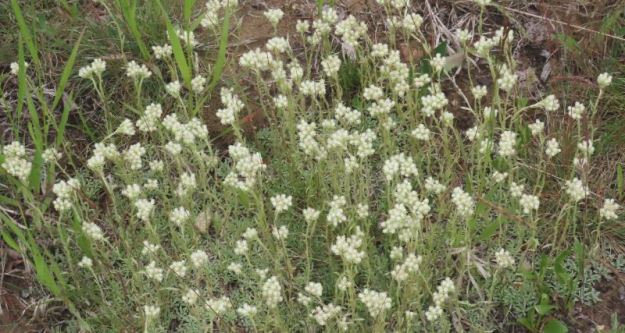
NW of Bruderheim NA, Small-leaf Pussytoes, Antennaria parvifolia, 2024-06-26_HTaube 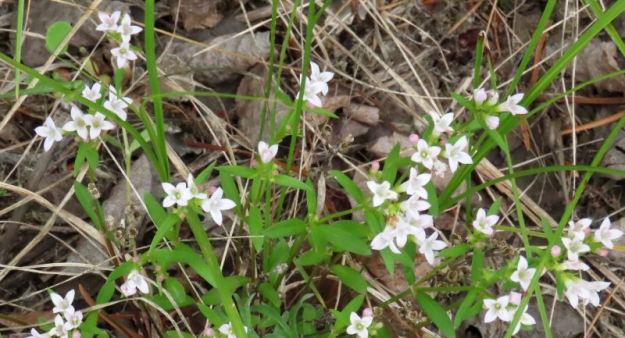
NW of Bruderheim NA, Longleaf Bluets, Houstonia longifolia, 2024-06-26_HTaube 
NW of Bruderheim NA, Longleaf Bluets, Houstonia longifolia, 2024-06-26_HTaube 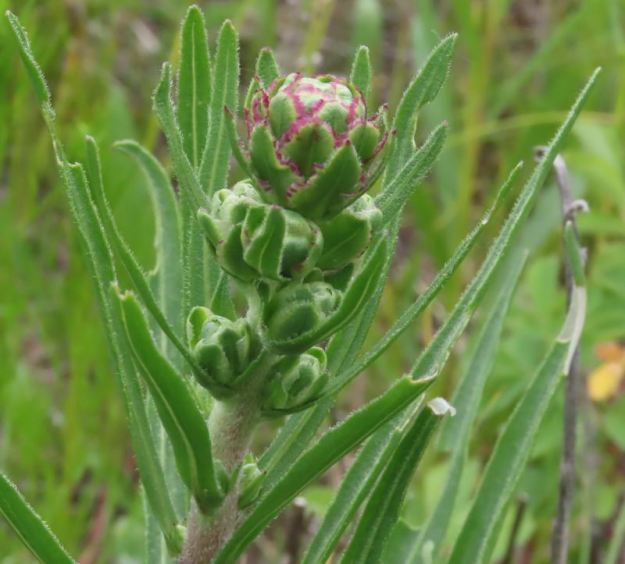
NW of Bruderheim NA, Meadow Blazingstar, Liatris ligulistylis, 2024-06-26_HTaube 
NW of Bruderheim NA, Longstalk Starwort, Stellaria longipes, 2024-06-26_HTaube 
Yellow lady’s slippers were abundant and gorgeous in Wagner Natural Area in mid June this year and easily seen from the Marl Pond Trail. 2024-06-16. P. Cotterill. 
Narrow-leaved cottongrass in seed, growing in a marl pond along the trail in Wagner Natural Area. 2024-06-16. P. Cotterill.
 SAPAA
SAPAA 