SAPAA offers numerous volunteer projects for post-secondary students, enhancing their resumes while addressing nonprofit needs. Each project emphasizes student involvement, providing practical experience alongside guidance from a dedicated project manager. These are also volunteer opportunities for SAPAA Members.
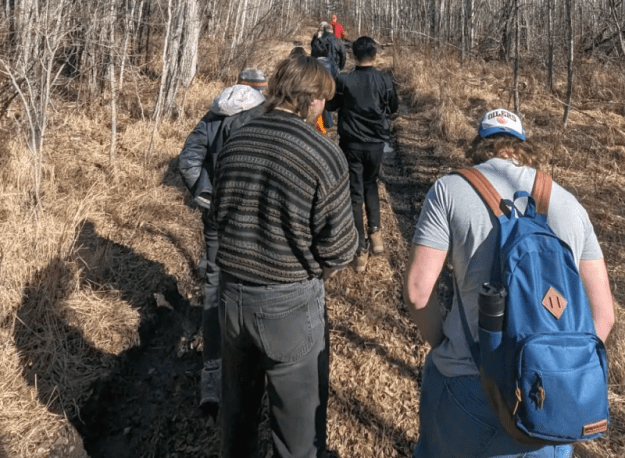
The following are the 2025-2026 projects of potential interest to student groups. They are listed in order of priority to SAPAA. Each project has three or four parts:
- STATUS: Whether assigned to a school/program and the SAPAA project lead. All status current to August 31, 2025.
- WHAT: A brief summary of the project including why it is important.
- DELIVERABLES: What is the final product(s).
- DETAILS: As available, other facts and notes.
- RESUME FODDER: How will the student reference the experience.
- How SAPAA Runs Projects
- Highest Priority Projects
- Very Important Projects
- Project 4 – Nearby Resident Communication Kit
- Project 5a – Database Replacement for Access
- Project 5b – Planning for Data Store
- Project 5c – Implement the SAPAA Data Store
- Project 6a – Revisit SAPAA Safety and Visit Application
- Project 6b – Field Notes Reader
- Project 7a – 2026 Minister’s Report
- Project 7b – 2026 Minister’s Report (GMU Version)
- Important Projects
- Project 8 – Level 1 & 2 Course and Certification Design
- Project 9a – SAPAA and iNaturalist
- Project 9b – Evaluate iNaturalist API Potential
- Project 10a – Monetizing the SAPAA Website
- Project 10b – Online Donation Enablement
- Project 11 – Operational and Safety Peer Review
- Project 12 – Research Site Inspection Best Practices
- Project 13 – Update Web Style Guides
- Project 14: Support a Mini-Conference
- Project 15: GoA Environmental Data Systems
- Project 16: Improvements to Site Inspection Questions
- Project 17: Support Legacy Digital Archiving
- Bonus Projects!
- Annex – What is a SAPAA?
How SAPAA Runs Projects
Stewards of Alberta’s Protected Areas Association (SAPAA) strives to provide a best in class learning opportunity for the students. Because SAPAA invests considerable time and effort in the students, it runs its projects using these philosophies:
- One Neck to Choke. Single project manager selected by the team.
- Let’s Talk. Students juggle many priorities. We can discuss scope or pivot.
- Think Resume, Not Grade. Grades are important, employment more so.
Highest Priority Projects
These projects are critical to be completed by March, 2026. If not done by a student team, they will be completed by a SAPAA volunteer.
Project 1 – Review AS-IS Site Inspection Business Process
- STATUS: Available; Frank, President.
- WHAT: Suggest enhancements and document the existing (AS-IS) site inspection business processes with the intention of incremental improvements. Although there are discussions to implement technical solutions, how can the manual processes be leaned, automated, improved, and documented?
- DELIVERABLE(S):
- Prepare an AS-IS business process description of the manual methods of moving content from an online Google Sheet into the destination Microsoft Access (Access) database.
- Identify, recommend, and potentially implement ‘low-hanging-fruit’ process enhancements.
- Identify, recommend, and potentially implement more challenging enhancements that do not involve changing the underlying technology but may use technical enablers between them (e.g. Macros, data integration tools, or AI).
- Recommend easy to implement enhancements such as improved form technology, data integration tools, verification, etc.
- RESUME FODDER: Prepared an AS-IS analysis of existing business processes. Recommended/implemented both low cost/effort enhancements and higher cost/effort improvements.
- ACADEMIC FOCUS(es): Business, Process/Organizational Management, or Computer Science.
Project 2 – Rural MLA Engagement
- STATUS: Available; Frank, President.
- WHAT: The constituents of Rural MLAs are a potential beneficiary of improved monitoring of protected areas. What are the value propositions for both audiences and how best to enlist their assistance in support of SAPAA?
- DELIVERABLE(S):
- Conduct a market assessment of both rural MLAs and local residents vis-à-vis the benefit of protected areas and the problems they encounter.
- Develop a prospect list and marketing plan based on the above assessment; recommend next steps and seek approval to proceed.
- Implement at least a test marketing effort in support of the above.
- RESUME FODDER: Conducted a market assessment that included both rural landowners who lived in proximity to natural areas and their Members of the Legislative Assembly of Alberta. Development a marketing plan and tested its efficacy.
- ACADEMIC FOCUS(es): Marketing, Communications, or Political Science.
Project 3 – Peer Organization Market Scan
- STATUS: SAPAA thanks Matt Kingston and SEM 638 UofA; Frank, President.
- WHAT: Individual volunteers conducting site inspections is problematic for SAPAA due to the associated costs and risks. An alternative are organizations running field trips that may be interested in submitting a site inspection report. These organizations may already be visiting the area or choose to visit new sites. The student team will prepare a market opportunity scan.
- DELIVERABLE(S):
- Review SAPAA’s 2026-2028 Strategic Plan for context of this market.
- Develop a list of prospective organizations that may visit one or more of Alberta’s Protected Areas.
- Develop a marketing plan considering things such as audience, marketing channels, messaging, transition to from prospect to sales, and how to close.
- RESUME FODDER: Create a market plan for nonprofits where the organization’s programming priorities align with the client’s strategic objectives.
- ACADEMIC FOCUS(es): Business or Marketing.
Very Important Projects
These projects can wait, a little bit, for their completion. They are very important for either programmatic (e.g. nearby resident communications) or operational (e.g. database) reasons.
Project 4 – Nearby Resident Communication Kit
- STATUS: Thank you to Dr. Valerie Ouedraogo, Grant MacEwan University, SOWK 303
- WHAT: Nearby residents of a protected area represent the nearest and best Stewards due to their proximity and interest in the area’s well being. Potential initial reaction on contact ranges from keen interest to hostility. How to engage prospective residents and convert their interest into becoming a Steward. How to manage the risks to volunteers whose contact with a resident is untoward or hostile.
- DELIVERABLE(S):
- Perform a market scan of similar nonprofits as well as commercial enterprises cold calling rural residents and learn what methods and messaging works best.
- Develop use-cases for a variety of prospects.
- Develop sales scripts for the use cases and material to help respond to both good and untoward interactions.
- Present communication material to SAPAA for review and potential implementation.
- RESUME FODDER: Developed sales scripts for volunteers who are cold calling rural residents to recruit them for a social enterprise. Considered and developed multiple scenarios for an easy close through to an overtly hostile response.
- ACADEMIC FOCUS(es): Computer Science.
Project 5a – Database Replacement for Access
- STATUS: SAPAA thanks Mark Polak and CMPT 401, U of A; Frank, President.
- WHAT: Currently SAPAA collects its site inspection data via Google Sheets and stores the data is a Microsoft Access database (Access). This technical infrastructure was great for system and data modeling but not for collaboration. What are SAPAA’s requirements for the next 2-years and what online data systems can take over from Access?
- DELIVERABLE(S): Determine how best to store SAPAA data.
- Conduct a market scan of databases that meet SAPAA requirements, integrating into Google Workspace and are affordable.
- Evaluate the databases, using a simple scale to be determined.
- Prepare a report with a summary of findings and present to the board and interested members and peer organizations.
- Continued development and use of Access must be an option.
- RESUME FODDER: Conducted a comprehensive market scan of data systems associated with protected areas and evaluated them as to their fit for purpose for managing site inspection data.
- ACADEMIC FOCUS(es): Computer Science.
Project 5b – Planning for Data Store
- STATUS: SAPAA thanks Mark Polak and CMPT 401, U of A; Frank, President.
- WHAT: Based on the results of Project 1 – Database Replacement for Access, develop a project plan. Depending on the student team, this may be a continuation of Project 1 or a new team.
- DELIVERABLE(S): Project plan based on a series of project assumptions.
- Project assumptions include considerations of who will be doing the build (same student team, different, etc.).Either a waterfall or agile plan is acceptable.
- Present plan to the SAPAA board for consideration.
- RESUME FODDER: Prepared a project plan for a system replacement moving a database from an on premise to cloud model. Considered numerous complexities such as availability of volunteer resources and the need for change and training management.
- ACADEMIC FOCUS(es): Computer Science.
Project 5c – Implement the SAPAA Data Store
- STATUS: SAPAA thanks Mark Polak and CMPT 401, U of A; Frank, President.
- WHAT: Based on Project 2 – Planning for Data Store, implement the selected database environment
- DELIVERABLE(S): Build, convert, test, launch, and support the data store.
- RESUME FODDER: Building on a systematic analysis phase, built and implemented a data store replacing a legacy on premise version. This work included data conversion, training for end users, creation of documentation, and a warranty support period.
- ACADEMIC FOCUS(es): Computer Science.
- ACADEMIC FOCUS(es): Computer Science, or Occupational, Health, and Safety.
Project 6a – Revisit SAPAA Safety and Visit Application
- STATUS: SAPAA thanks Mark Polak and CMPT 401, U of A; Frank, President.
- WHAT: Picking up where a former Computer Science 401 project left off, update the built but never implemented phone application. This includes the updated safety program and linkage to the historical site inspection database.
- DELIVERABLE(S):
- Review pre-existing development done by CMPT 401 (v1) and understand the design and technical decisions made by that group.
- Launch v1 and perform a field test as part of the above review.
- Analyze changes made to the safety requirements and implement in the application.
- Analyze and propose for implementation linkages to the SAPAA Data model and existing Microsoft Access database (Access).
- Implement a working proof of concept for the above changes and field test.
- Provide recommendations as to what are next steps and further development needed.
- Note that Access is a temporary data repository and is expected to be replaced with an online database through other initiatives.
- RESUME FODDER: Built on design development performed by a previous research team and augmented a minimum viable product (MVP). Support product launch decisions based on the maturity of this MVP.
- ACADEMIC FOCUS(es): Computer Science.
Project 6b – Field Notes Reader
- STATUS: SAPAA thanks Mark Polak and CMPT 401, U of A; Frank, President.
- WHAT: A phone application downloads historical site inspection data including images for offline review of information for a natural area. The reader is meant to be unidirectional and will not record new nor update existing site inspections.
- DELIVERABLE(S):
- Review pre-existing development done by CMPT 401 (v1) and understand the design and technical decisions made by that group.
- Analyze the SAPAA Data model and existing Microsoft Access database (Access).
- Analyze the existing image management methods used by SAPAA.
- Propose a design including considerations for the data and application to be downloaded to Android phones with iOS as a secondary consideration.
- Using Agile developments, create at least three development iterations of the Field Reader.
- Implement a working proof of concept for the above changes and field test.
- Provide recommendations as to what are next steps and further development needed.
- RESUME FODDER: Built on design development performed by a previous research team and augmented a minimum viable product (MVP). Support product launch decisions based on the maturity of this MVP.
- ACADEMIC FOCUS(es): Computer Science.
Project 7a – 2026 Minister’s Report
[Note, there are two projects. 7a is the original saved for reference. 7b is a revised version for Grant MacEwan University.]
- STATUS: Available; Frank, President.
- WHAT: For the third year in a row (see the 2024 and 2025 reports), SAPAA will provide to the responsible provincial Ministers a report on the state of Alberta’s protected areas. This project will help in the analysis, writing, and potentially presentation of findings.
- DELIVERABLE(S):
- Assist in the creation of the 2025 Minister’s report.
- Identify data visualization opportunities for current and historical site inspection data; recommend and implement as approved.
- Develop documentation for SAPAA on recreating for subsequent years.
- DETAILS:
- Review the rolling 3-year site inspection data and previous reports and recommend enhancements, changes, and other modifications to the 2026 report.
- Conduct data analysis and generate findings/visuals.
- Assist in the drafting of the report.
- Develop and potentially deliver live and recorded summaries of the report findings.
- RESUME FODDER: Analyzed three years of data to support the findings of a report to provincial Ministers responsible for the environment. Recommended data visualization to improve the messaging for a variety of political, public, and peer audiences.
- ACADEMIC FOCUS(es): Computer Science, Communications, or Graphic Design.
Project 7b – 2026 Minister’s Report (GMU Version)
- STATUS: Available; Frank, President, under review by GMU
- WHAT: For the third year in a row (see the 2024 and 2025 reports), SAPAA will provide to the responsible provincial Ministers a report on the state of Alberta’s protected areas. This project is a multi-disciplined effort to prepare the report.
- DELIVERABLE(S):
- Write up to the final draft of the 2025 Minister’s report and support the final version.
- Incorporate a three discipline approach into the report, namely:
- 1. Economics/Political Science: This individual(s) will be the student lead on the project and will consider what does the Minister(s) need to know and what will be of most interest to them.
- 2. Information Technology: Having a data analytics/science background allows this individual to generate both evidence based tables and visualizations consumable by senior executives.
- 3. Environmental Sciences: As the content expert, ensures both the report and the presentation adheres to sound scientific principles.
- Other skills: communications for report presentation, psychology to make the data/report consumable to the public and media.
- AI Option: Use available artificial intelligence to support the above. This will include retrofitting historical data with current data methodologies.
- Develop documentation for SAPAA to recreate in subsequent years.
- This team in particular will be run as a ‘gig-consultant’ project.
- DETAILS:
- Review the rolling 3-year site inspection data and previous reports and recommend enhancements, changes, and other modifications to the 2026 report.
- Conduct data analysis and generate findings/visuals.
- Assist in the drafting of the report.
- Develop and potentially deliver live and recorded summaries of the report findings.
- RESUME FODDER: Analyzed three years of data to support the findings of a report to provincial Ministers responsible for the environment. Recommended data visualization to improve the messaging for a variety of political, public, and peer audiences.
- ACADEMIC FOCUS(es): Computer Science, Humanities, Communications, Statistics, or Graphic Design.
Important Projects
For instructors or students, feel free to select one of these projects noting they are important but just not as critical. Some are carry overs from previous years, all are interesting in their own right!
Project 8 – Level 1 & 2 Course and Certification Design
- STATUS: Available.
- WHAT: Develop a syllabus for the SAPAA operational and safety program. This will include recommended modules, content, examinations, and certification.
- DELIVERABLE(S):
- Perform a market scan for similar course in Canada, the US, Europe, or Australia/New Zealand.
- Build course content to address the existing and potential learning elements in the SAPAA Operational/Safety plan.
- Review the content with stakeholders, revising as required.
- Identify existing content from third parties covering the content.
- Design a learning system within SAPAA’s technical and financial constraints.
- Creation of the system is out of scope unless the team has capacity.
- RESUME FODDER: Developed a learning system that stressed lone worker, and remote site operations and safety. Reviewed content with potential users to refine and improver the user experience.
- ACADEMIC FOCUS(es): Environmental Science, or Education.
Project 9a – SAPAA and iNaturalist
- STATUS: Available.
- WHAT: Prepare online and video tutorials for using iNaturalist in a SAPAA context.
- DELIVERABLE(S):
- Learn and attend field training to understand iNaturalist.
- Perform a market scan to identify existing iNaturalist training content and rate the content according to a rubric as to its applicability to SAPAA.
- Conduct a needs assessment of existing SAPAA members and peer organizations vis-à-vis their iNaturalist literacy.
- Perform a risk/benefit assessment of increasing the use of iNaturalist.
- Prepare a final report including a recommendation for next steps and an implementation plan.
- RESUME FODDER: Prepared a market/collaboration assessment for a nonprofit that evaluated the risks and benefits of passively partnering with online tools.
- ACADEMIC FOCUS(es): Environmental Science, or Computer Science.
Project 9b – Evaluate iNaturalist API Potential
- STATUS: Available.
- WHAT: Evaluate how SAPAA can make better use of iNaturalist’s open-source API to extract and insert information into website. Develop proof of concept data visualization for the SAPAA website.
- DELIVERABLE(S):
- Learn and attend field training to understand iNaturalist.
- Perform a technical scan of how other organizations use iNaturalist’s API.
- Analyze how SAPAA can use the API including piloting potential online data visualizations.
- Recommend next steps including a high level project.
- Implementation is out of scope unless time and resources permit.
- RESUME FODDER: Assessed, designed, prototyped, built, tested, and supported the creation of an API from a cloud based social media site into a static data store.
- ACADEMIC FOCUS(es): Computer Science.
Project 10a – Monetizing the SAPAA Website
- STATUS: Available.
- WHAT: Nonprofit struggle to find Time, Talent, and Treasure leading to the question, what assets can be leveraged or monetized. For SAPAA, its website represents an opportunity to generate passive income through online advertising. This project will examine the pros and cons of pursuing this option including the relative moral hazards of doing so.
- DELIVERABLE(S):
- Perform a market scan of potential ‘buyers’ for SAPAA’s website.
- What is the net-profit potential of monetizing the website.
- What do other peer organizations do in respect to monetization.
- What are legal, tax, and reputational risks of monetizing.
- Prepare a final report including a recommendation for next steps and an implementation plan.
- RESUME FODDER: Prepared a website monetization plan for a nonprofit that including a multi-faceted risk assessment.
- ACADEMIC FOCUS(es): Business, or Computer Science.
Project 10b – Online Donation Enablement
- STATUS: Available.
- WHAT: Investigate the ways and means to encourage and collect online donations to support SAPAA’s efforts. This is to be done in conjunction with Nature Alberta (NA) which holds a CRA Charitable number.
- DELIVERABLE(S):
- Perform a market scan to determine how other NA clubs take advantage of the CRA tax status.
- Perform a market analysis to determine the donation potential for SAPAA and ultimately, is it worth the bother.
- Perform a technical, operational, and risk analysis of implementing online donations considering such things as tax liability, technical needs, reputational risk, security/scammer risks, etc.
- Prepare a final report including a recommendation for next steps and an implementation plan.
- RESUME FODDER: Prepared an online donation plan for a nonprofit that including a multi-faceted risk assessment.
- ACADEMIC FOCUS(es): Computer Science.
Project 11 – Operational and Safety Peer Review
- STATUS: Available.
- WHAT: Support and help to deliver a best practice virtual/in-person conference on best practices in volunteer safety and SAPAA’s proposed program. Event(s) to be held in March 2026 and open to SAPAA members (individuals and organizations), Nature Alberta’s affiliated clubs, environmental organizations, and nonprofits.
- DELIVERABLE(S):
- Review and analyze the SAPAA operational and safety program; provide suggestions for immediate and low-cost enhancements.
- Working with SAPAA, conduct a peer review of the state of their safety protocols.
- Assist in the design and development of a peer review of SAPAA’s program including determining format (virtual/in person), duration, audience, agenda, audio visual tools, etc.
- Assist in the delivery, debrief, and documentation of the conference.
- RESUME FODDER: Performed a peer review of better and best practices related to operations and worker safety. Assist in the delivery and documentation of a conference attended by XX industry experts on operations and worker safety.
- ACADEMIC FOCUS(es): Occupational, Health, and Safety.
Project 12 – Research Site Inspection Best Practices
- STATUS: Available.
- WHAT: What information can an amateur site inspector reasonably collect?
- What categories of questions (e.g. botanical, disturbances, or social/political) can be collected?
- What do other jurisdictions do when citizens visit public lands submit site inspections?
- These questions will be considered from a best practice lens.
- The team will present findings to the board and other individuals suggested by SAPAA.
- DELIVERABLE(S): Research, analyze, and present findings to answer the question, what can reasonably be expected from volunteer/lay site inspectors.
- DETAILS:
- Working with SAPAA, discuss with the Government of Alberta their information requirements.
- Working with SAPAA, discuss with peer organizations their information requirements.
- Consolidate and analyze results, formulate recommendations for SAPAA’s site inspection questions and process.
- RESUME FODDER: Conducted a best practice survey of citizen-science/stewardship and presented findings and recommendations to a nonprofit engaged in this activity.
- ACADEMIC FOCUS(es): Environmental Science.
Project 13 – Update Web Style Guides
- STATUS: Available.
- WHAT: A core asset of SAPAA is its website. It has grown organically and as a result has some variation across its web pages and three different style guides.
- This project will consolidate (or update) the style guides, produce definitive documentation, and test the style guides across existing pages.
- The focus is on ensuring consistent language on the website using practical instruction and guidance.
- Technical knowledge of website development is an asset but not required.
- As such, good writing skills, empathy, and an interest in program design (technical, social, etc.) would be beneficial.
- DELIVERABLE(S):
- Review and research best practices for similar websites and audiences.
- Analyze and recommend a final set of style guide(s) for the SAPAA website.
- As time permits, conduct a proof-of-concept update of some web pages.
- As time permits, host a webinar for peer and interested organizations on the work performed, write a best practice guest blog on myorgbio.org.
- RESUME FODDER:
- Analyzed audiences for a website and evaluated existing style guides in meeting the website goals.
- Recommended and implemented revised style guides using both manual and automated methods including AI.
- ACADEMIC FOCUS(es): Marketing or Communications, Computer Science/Technical Writing.
Project 14: Support a Mini-Conference
- STATUS: Available.
- WHAT: One of the legacy benefits of being a volunteer steward was the opportunity to attend an annual conference. Awards, best practices, and updates were provided. The last conference was held in 2017 and SAPAA is thinking of running a ‘mini conference’ in the fall of 2025. This team will work with the assigned board member.
- DELIVERABLE(S):
- Determine whether SAPAA should hold a 2025 conference. Prepare 1-3 options, a recommendation, and seek board approval to proceed (or not). Develop a preliminary project plan for the conference. The analysis should include:
- The benefits of an in-person conference to SAPAA, its members, partners, and the GoA.
- Identify 1-3 possible formats for the conference and include in each a cost estimate, date, duration, complexity/risks to organize, location, etc.
- Present options to the board with a recommendation to (not) proceed as applicable.
- Develop a more detailed event-plan based on board approval.
- Identify possible add-ons before and after the conference, for example field trips, lectures, courses, etc. “
- Determine whether SAPAA should hold a 2025 conference. Prepare 1-3 options, a recommendation, and seek board approval to proceed (or not). Develop a preliminary project plan for the conference. The analysis should include:
- YOUR RESUME FODDER:
- Designed a conference to coordinate best practices in volunteer stewardship of protected areas.
- ACADEMIC FOCUS(es): Project Management, or Event Management.
Project 15: GoA Environmental Data Systems
- STATUS: Available.
- WHAT: The Government of Alberta uses a number of data systems to manage its Crown Land obligations. What is the purpose of each of these systems, is there public access, and what is the applicability to SAPAA’s mandate.
- DELIVERABLE(S): Prepare a report and present findings to SAPAA members and invited guests.
- YOUR RESUME FODDER:
- Conducted a review of data systems used by the Government of Alberta, their level of public access, and the applicability to one environmental organization.
- ACADEMIC FOCUS(es): Environmental Science, or Data Science.
Project 16: Improvements to Site Inspection Questions
- STATUS: Available.
- WHAT: Review, analyze, critique, and recommend for improvement the Site Inspection Questions. The questions are a continuation of those asked on the legacy Alberta Government forms plus additions and refinements since 2023. The focus is on questions an interested lay person can reasonably answer within a 1-3 hours site visit.
- DELIVERABLE(s): Analysis and recommendations for enhancements to the Site Inspection questions. Consideration will include the questions value to a wider variety of audiences including the provincial government, researchers, peer organizations, SAPAA Members, and the public at large. An assessment of Form technology can be added as a value added activity.
- RESUME FODDER:
- Analyzed a field research tool used by lay persons visiting Alberta’s protected areas and recommended enhancements for improvements.
- ACADEMIC FOCUS(es): Environmental Science.
Project 17: Support Legacy Digital Archiving
- STATUS: Available.
- WHAT: Hundreds of individuals acted as Alberta Government Stewards. Their reports are one piece of information they provides a longitudinal record of the state of these sites. Photos, GPS tracks, videos, and possibly paper records are another. These artefacts are scattered across individual computer drives and boxes in basements. Likely a good number are lost as the former volunteers age out. This project will attempt to capture at least a portion of these digital records and index them.
- DELIVERABLE(s):
- Develop an archiving strategy and create systems and processes to execute this strategy.
- Run necessary proof of concept and beta tests for the strategy.
- Develop communication strategies to make former volunteers, and their families, aware that the archiving opportunities.
- Manage, triage, archive received digital files.
- Support the digitalization of manual records.
- Report on progress, quality of records received, indexing efforts, etc.
- RESUME FODDER:
- Developed a strategy of digital content at risk of loss and implemented a simple and sustainable program to capture, index, and make available this content.
- ACADEMIC FOCUS(es): Computer Science or Records Management.
Bonus Projects!
The following projects are not for SAPAA’s direct benefit but are included as one or more board members are working on them.
Bonus 1 – Spring 2026, CPA Alberta & Grant Management Best Practices
- STATUS: Available; Frank, President.
- WHAT: The Chartered Professional Accountants of Alberta (CPA) runs information sessions for nonprofits. In the Spring of 2026, a session is planned that will discuss best practices of grant management. Speakers from both granting organizations and veterans from nonprofits will discuss tricks, tips, and what exactly is realistic.
- DELIVERABLE(S): Support the webinar/conference from inception to conversion into a podcast, YouTube Video, etc.
- YOUR RESUME FODDER:
- Assisted in the design, delivery, and documentation of best practices in grant management.
Bonus 2 – Planning for the Waskahegan Trail Guide, 9th ed.
- STATUS: Available; Frank, President.
- WHAT: The Waskahegan Trail Association (WTA) publishes a trail guide for its members. Written in Microsoft Publisher, this technology is being de-supported in the fall of 2026. A replacement technology is being investigated and planning for the next edition of the guide must take this into account.
- DELIVERABLE(S): Support the identification of alternative desktop publishing or online delivery of the trail guide noting the need for off-line access to and security of the content. Assist in the content conversion to the new technology. Develop training and operational documentation for the guide. Assist in the planning of the 9th edition which is expected in 2028 or 2029.
- YOUR RESUME FODDER:
- Assisted in the design, delivery, and documentation of best practices in desktop publishing, content security, and business planning.
Annex – What is a SAPAA?
Although students (and consulting companies) are expected to do their research in advance, the following provides some background to the legacy Alberta Government Volunteer Stewardship program and SAPAA. For the uninitiated, it is recommended that you visit these links and, in the order, presented.
- Volunteer Stewardship – Backgrounder | SAPAA
- CBC Story – Volunteer Stewardship Program | SAPAA
- A Short Selected History of SAPAA | SAPAA
More Background (including past CSL site visits!)
 SAPAA
SAPAA 
Pingback: 2025-11-01 – Student Field Trip – RL56 | SAPAA
Pingback: 2025 President’s AGM Report | SAPAA
Pingback: 2026-01-31 – Student Field Trip – RL56 | SAPAA