Conifers are unique, cold-climate trees that thrive in the Northern and Southern Hemispheres. In Alberta, key species like white and black spruce, tamarack, lodgepole pine, and jack pine are prominent. Their adaptations, such as needle retention and resin production, enhance survival in harsh conditions, making them vital to local ecosystems.
by Patsy Cotterill
Conifers (cone-bearing) trees are a fascinating group of naked-seed-bearing plants, confined to the colder areas of the Northern and Southern Hemispheres. Without the distraction of the leaves of deciduous, broadleaf trees, winter is a good time to take a closer look at our Alberta native species. They can provide useful information about the ecosystems of our natural areas.
- Mountain conifers
- Common species found in the lowlands
- Things you Need(le) to Know About Conifers
- Select Tree and Cone Identification
- Adaptations of conifers
- Notes and Further Reading
Mountain conifers
Most of us will be least familiar with the mountain species, of which there are several. High-elevation species include Engelmann spruce (Picea engelmannii), subalpine fir (Abies bifolia) and whitebark pine (Pinus albicaulis). This last species is fairly rare and is becoming increasingly so, to the point of concern. It has a special relationship with the Clark’s Nutcracker, which eats but also caches its seeds and thereby promotes germination.
Limber pine (Pinus flexilis) can also reach subalpine situations but seems more common in the montane, where it frequents slopes and rocky ridges. Southern Kananaskis, the Porcupine Hills and the Kootenay Plains area are good places to see it.
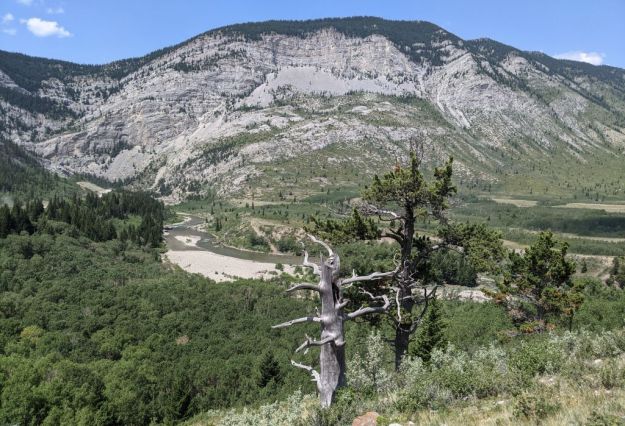
Two species or larch (Larix) are also mountain species: western larch (Larix occidentalis), which is quite rare, and subalpine larch (Larix lyallii) which is commoner. Larches are unusual (although not unique) in being deciduous conifers, not evergreens.
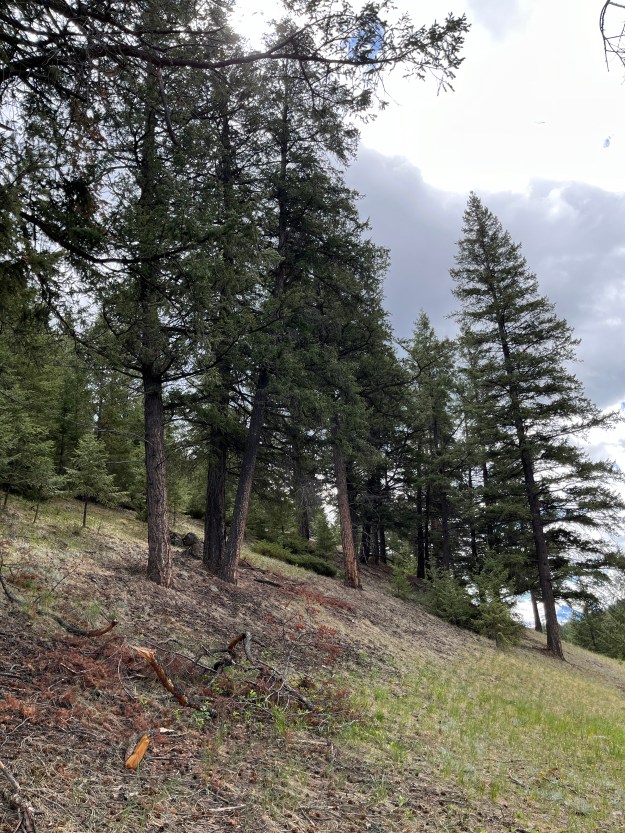
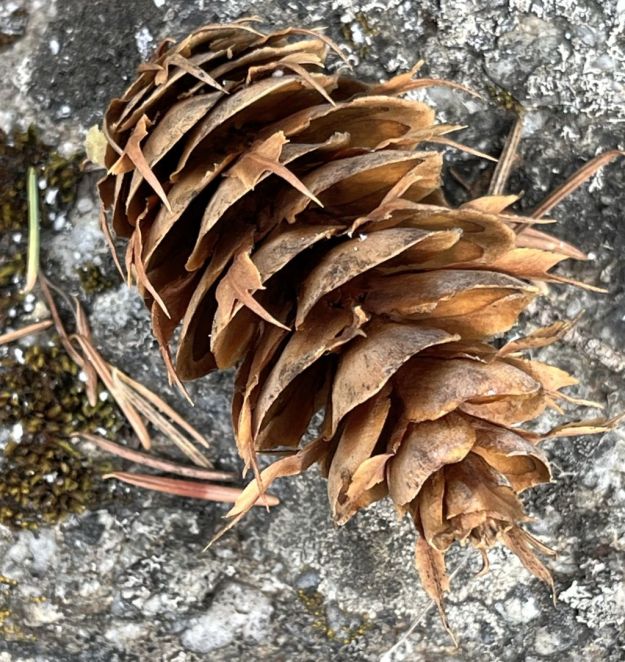
Rocky Mountain Douglas-fir, (Pseudotsuga menziesii var. glauca), as its name suggests, is also a species of the mountains and foothills. It is in its own genus, Pseudotsuga, because it is neither a spruce nor a pine or a fir. (Its Latin name means “false hemlock.”)
Common species found in the lowlands
The five species that are likely to be encountered in the central lowlands of Alberta and which I will consider in a little more depth, are the white and black spruces, jack pine, lodgepole pine and tamarack. A sixth species, balsam fir (Abies balsamea) is primarily a boreal species, and has a wide distribution across Canada, but is not very commonly encountered. Coyote Lake Nature Sanctuary does, however, have a small, lakeside population.
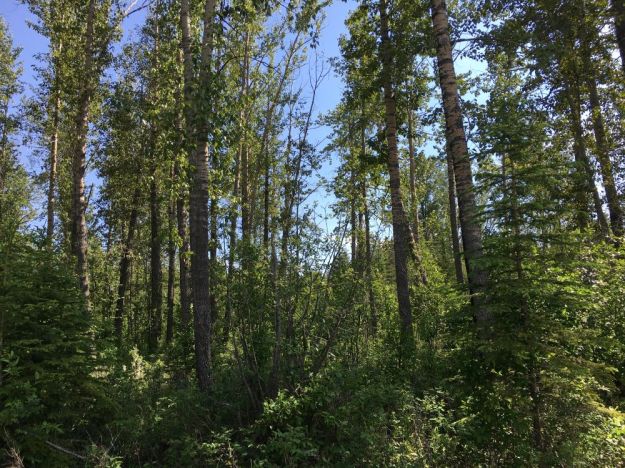
An important first step in distinguishing the five common species is to be able to recognize the difference between spruce, pine and larch.
Things you Need(le) to Know About Conifers
- SPRUCE NEEDLES are inserted singly on the twigs on short, peg-like projections which remain after the leaves fall off and give the twig a rough, knobby appearance.
- The leaves are four-sided, so can be rolled between the fingers, and are pointed at the tips, making them prickly to the touch.
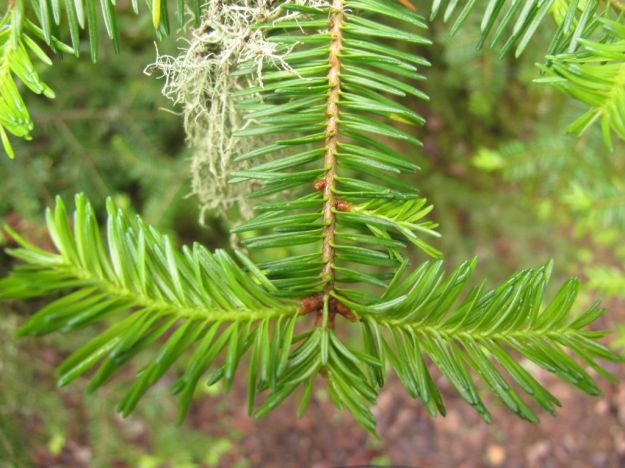
- FIR NEEDLES are also singly-attached leaves but they are flat and rounded at the tip, soft to the touch.
- When they fall off (even the leaves of evergreens have to be replaced), they leave flattish leaf scars rather than the prominent pegs of spruce twigs.
- BALSAM FIR NEEDLES are arranged in two horizontal rows rather than all round the twig, giving them a characteristic appearance.
- PINE and LARCH NEEDLES are clustered into bundles of varying numbers of leaves.
- In pines, the number of needles per bundle is either two, three or five, depending on the species, and they are enclosed at the base by a brown, papery bundle-sheath, which in turn is attached to a tiny microshoot.
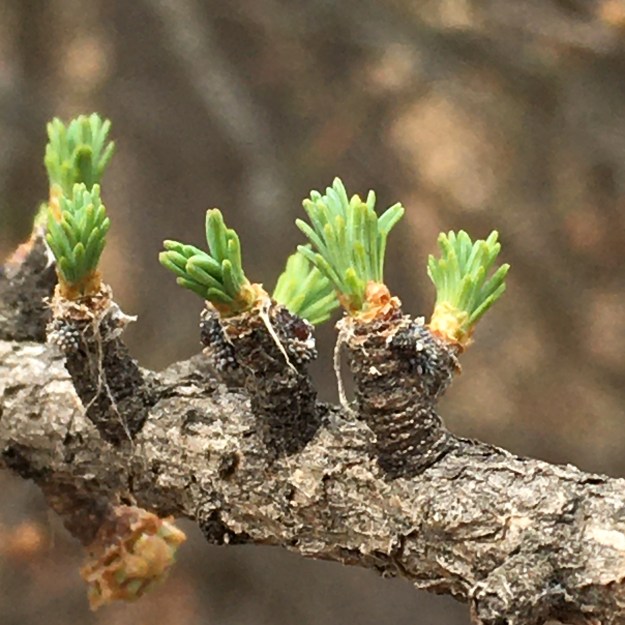
- By contrast, in larches the needles, usually shorter than those of pines, are more numerous (10-60) in the bundles, and open from buds on conspicuous microshoots known as dwarf shoots.
- These make for distinctly knobby twigs on larches when the leaves, after turning a beautiful golden-yellow, fall off all at once in the autumn.
Select Tree and Cone Identification
Since cones vary in structure and appearance they are useful in identifying conifers along with leaves, twigs, and, to a lesser extent, bark characters.
Erect Fir Cones
The cones of firs are unusual in that they are erect, and the whole cones do not fall from the tree but the cone scales fall off individually, leaving behind the axis, as an upright spike.
White spruce (Picea glauca)
White spruce is the commonest and most abundant lowland spruce, forming pure forests farther north or at lower and middle elevations in the mountains. Farther south in the province it is confined to the cooler ravines.
White spruces are of course widely planted in all urban areas for their conical form and dark-green foliage on closely set, graceful branches. White spruce occurs all across Canada except for the more southern parts of the Prairies and the Pacific coast, on a range of soils.
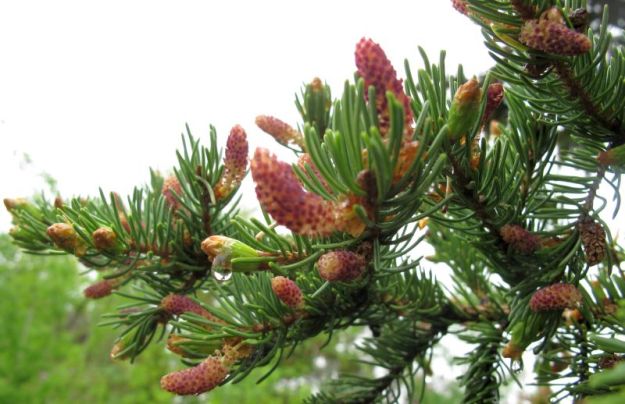
White Spruce Cones are slender, cylindrical, pale brown and 3-6 cm long, with flexible cone scales. They fall off the tree in autumn or the next spring after the seeds have been released, so they can be readily found on the ground for identification.
The seeds are an important source of food for Crossbills and squirrels; the latter cut down the cones and stash them in middens before the seeds have been released. White spruce is also known for having mast years, when cone production is particularly high.
Black spruce (Pinus mariana)
The black spruce is a skinny, cylindrical-shaped tree by comparison, often with a distinctive “crow’s-nest” topknot of short branches at the tip. It grows mainly in peatlands (i.e., on wet, organic soils) but in more northern areas it will grow on better drained soils in pure stands or mixed with deciduous trees such as poplar and birch. It also ranges across Canada.
The twigs of black spruce are dull and beset with short black hairs, in contrast to the twigs of white spruce that are hairless and smoother-looking.
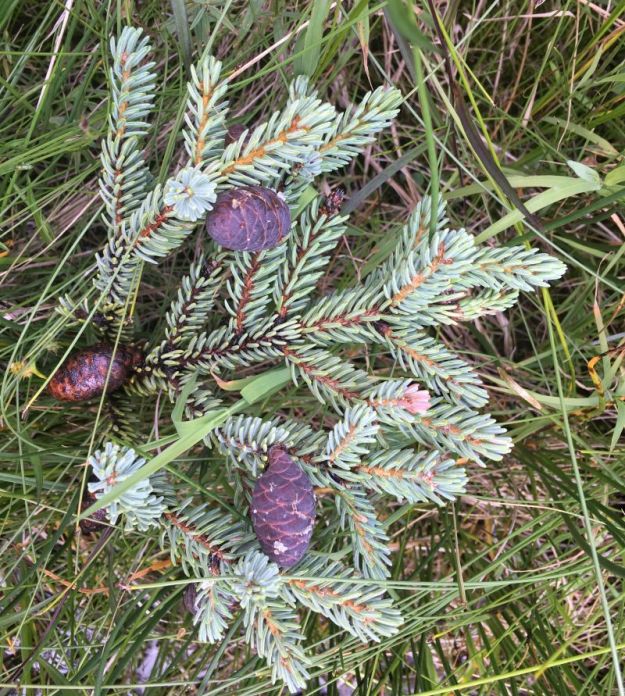
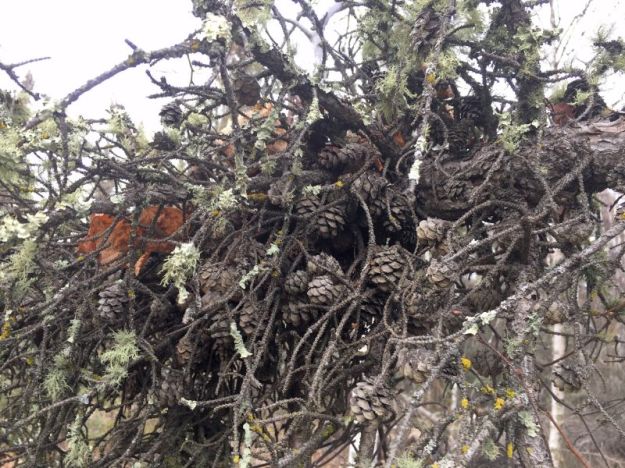
Black spruce cones differ distinctly from those of white spruce in being barrel-shaped, grey-brown, rigid and woody. They can stay on the tree for up to 30 years and are often clustered at the top of the tree. The practical consequence of this is that cones are best examined on trees that have fallen or on branches that have been cut down by squirrels. The seeds are released gradually over the years or all at once after a fire.
Tamarack (Larix laricina)
The tamarack is widely distributed tree across Canada, also favours peatlands as habitat, and often occurs with black spruce.
The fens in Wagner Natural Area are a good place to see both tamarack and black spruce, while white spruce occupy the somewhat higher ground. Here a number of tamaracks are stunted, small in size despite being hundreds of years old, twisted and gnarled.
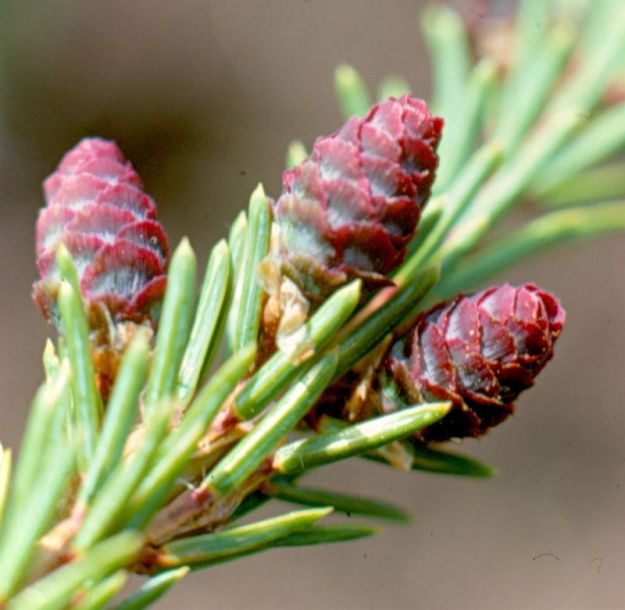
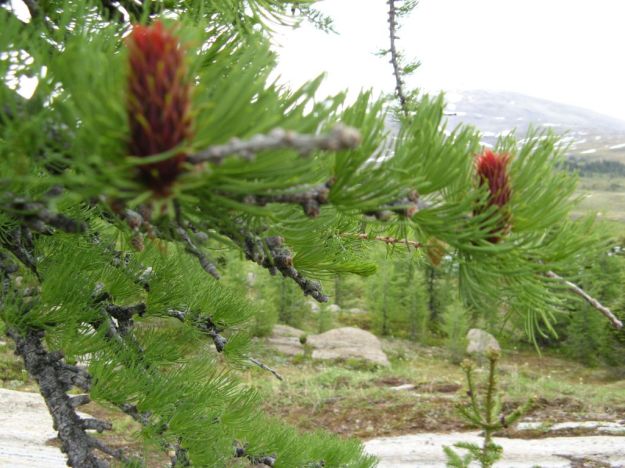
There are 15-60 needles per cluster, which are an attractive bright-green when they are newly emerged in the spring. The seed cones are pinkish-red and cylindrical when immature, but broadly oval, pale brown and woody when mature.
Lodgepole pine (Pinus contorta var. latifolia)
Lodgepole is generally associated with the mountains, but it does extend eastwards across Alberta although not as far as the eastern border, with the exception of its occurrence in the Cypress Hills, straddling the Alberta-Saskatchewan border in the south.
Known for its straight trunks, it often forms dense stands after a fire, having released copious amounts of seeds from the newly opened cones. In recent decades, many of these stands in the mountains have died from the fungal infection carried by the mountain pine beetle which obstructs their water-conducting system.
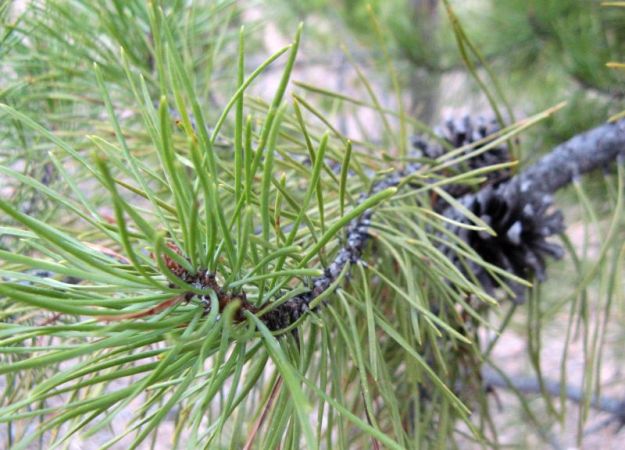
Cones and Needles The needles are in bundles of two, with persistent bundle-sheaths. The cones are short-cylindric to ovoid and the scales are tipped with a curved prickle. They are attached at right angles to the branch or point backwards. This is in contrast to the seed cones of jack pine which point forward towards the tip of the branches, a character that allows for identification of the two species.
Lodgepole pine is the official tree of Alberta. The varietal name, var. latifolia, is important to include, because the variety var. contorta refers to shore pine, a small tree of coastal B.C.
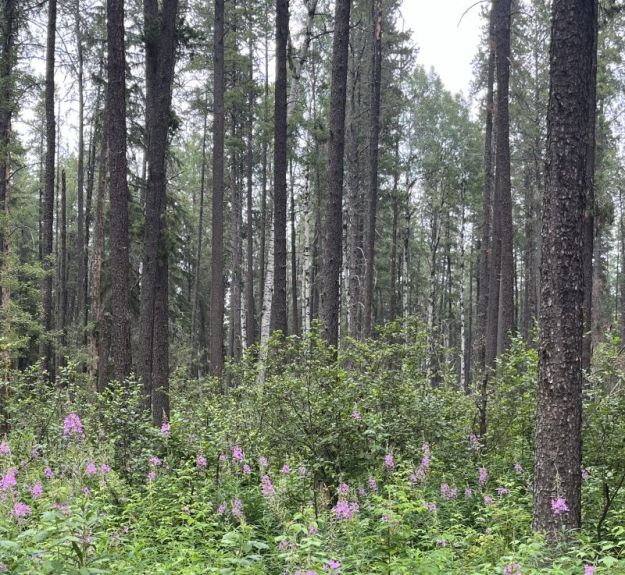
Jack pine (Pinus banksiana)
This is also a two-needled pine, is confined to the central and northern parts of our province. But as a wide-ranging species it extends farther south in the eastern provinces.
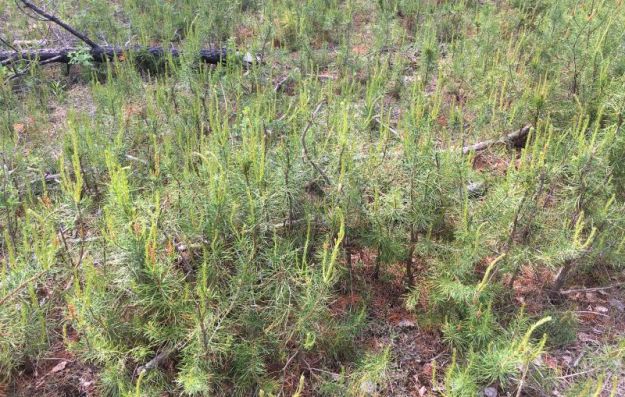
Jack pine needles and cones are a bit shorter than in lodgepole pine at 2-4 cm, similarly sharply pointed at the tips, and they tend to spread apart in the bundle. The stalkless cones are of variable shapes, conical to cylindrical, asymmetrical and curved, woody, without prickles, and pointing forward.
Jack and Lodgepole Pine Similarities
In both these pines the cones remain on the tree for 10-20 years, awaiting heat from sunlight or fire to melt the resin holding the cone scales tightly closed and allow escape of the seeds. The seeds are winged, and scattered by wind.
Trees growing after a fire can form dense stands of narrow-cylindrical, poorly-formed specimens, but more open-grown trees can eventually assume a quite different appearance, with thick trunks and widely spreading branches. (A difference to note between spruce and pine is that in pine there are big gaps between the rings (whorls) of branches, exposing the trunk, whereas in spruce there are many intermediate branches and little of the trunk is visible.)
Many of our sandhill Natural Areas north of Edmonton provide excellent opportunities for seeing jack pines, for example, Northwest of Bruderheim, Opal, Nestow, Halfmoon Lake, Bellis, Clyde Fen and Bridge Lake Natural Areas. Jack pine stands also occur on the Devon sand dune south of Edmonton and can be seen in the Clifford E. Lee Nature Sanctuary, University of Alberta Botanic Garden and Bunchberry Meadows Conservation Area.
Adaptations of conifers
Conifers are slower-growing than most deciduous, broadleaf trees, which enables them to better tolerate infertile soils and unfavourable climatic conditions. They have several features that mitigate drought.
The water-conducting cells in the xylem (tracheids) are narrow and so less prone to blockage by the formation of air bubbles, which can also dissolve more quickly after, say, a freeze-thaw event.
The small, hard, needles with thick cuticles reduce water loss by evaporation. Moreover, their small size promotes the coalescence of water droplets, which can then drip off to water the roots of the plants. This is especially true of the case for conifers such as redwoods which inhabit foggy coastal areas.
Why Do the Needles Stay?
Having evergreen needles that stay on the tree for several seasons means that the tree can get a head start on photosynthesis as soon as temperatures are warm enough, making for a longer growing season.
Tree Reproduction
Reproduction is almost entirely by seed, although a few species are capable of vegetative reproduction by a process called layering, when conditions are right. In most groups, male (pollen) and female ((seed) cones are on the same tree, although they may be on different areas of the tree.
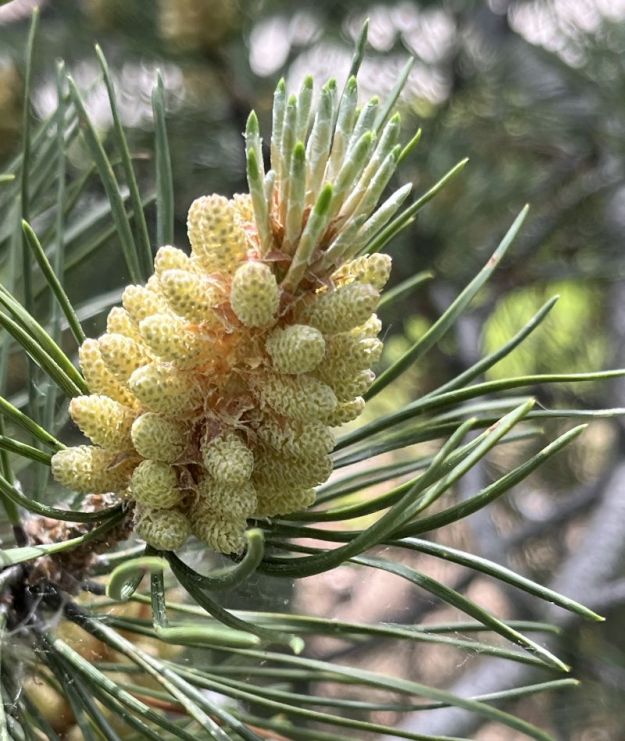
The pollen cones for the most part look like small catkins. In spruce they are yellowish when shedding pollen but turn brown and wither while still clinging to the tree.
The seed cones vary considerably in size and shape according to species, but all are made up of scales to whose inner side (facing the axis), the seeds, usually in twos, and with a papery wing attached, are appressed.
The cones are subtended by flexible bracts which may be so small as to be invisible or longer than the cone scales and having diagnostic features. How long the cones take to mature, remain on the tree and release their seeds again depends on the species.
Resin, a Sticky Topic
Resin production by conifers gives them their pleasing smell, particularly noticeable on a hot summer’s day, but for the tree, resin functions as a defense mechanism against insects and fungi, engulfing insects and closing wounds. Resin duct openings should not be confused with the lines of white dots (stomata for gas exchange) on or below the needles, visible particularly in spruces, firs and larches.
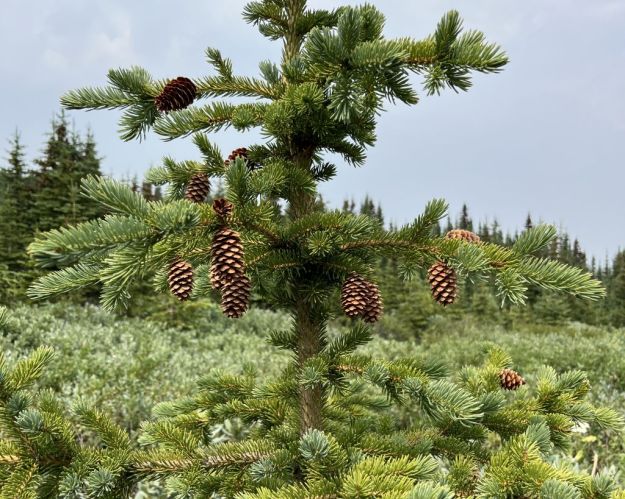
Another fascinating aspect of conifers is their history in geological time. They are well worth a study. There is a considerable amount of information about them online.
Notes and Further Reading
- A very useful reference is: Farrar, John Laird. 1995. Trees in Canada. Canadian Forest Service and Fitzhenry & Whiteside Ltd.
- An identification key can be accessed at: https://tidcf.nrcan.gc.ca/en/trees/identification/conifers.
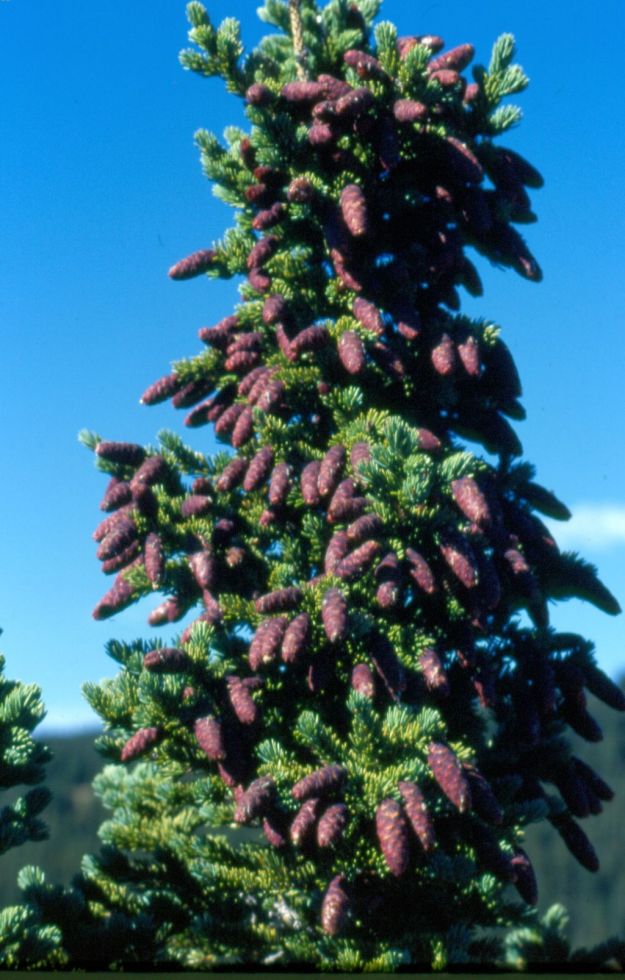
Engelmann spruce showing immature seed cones concentrated at the top of the tree. Cardinal Divide, 1995-09-03, P. Cotterill. 
Subalpine fir, showing upright seed cones and (lower left) axis spikes after cone scales have fallen. Ptarmigan Cirque, Kananaskis Country, 2008-07-12, P. Cotterill. 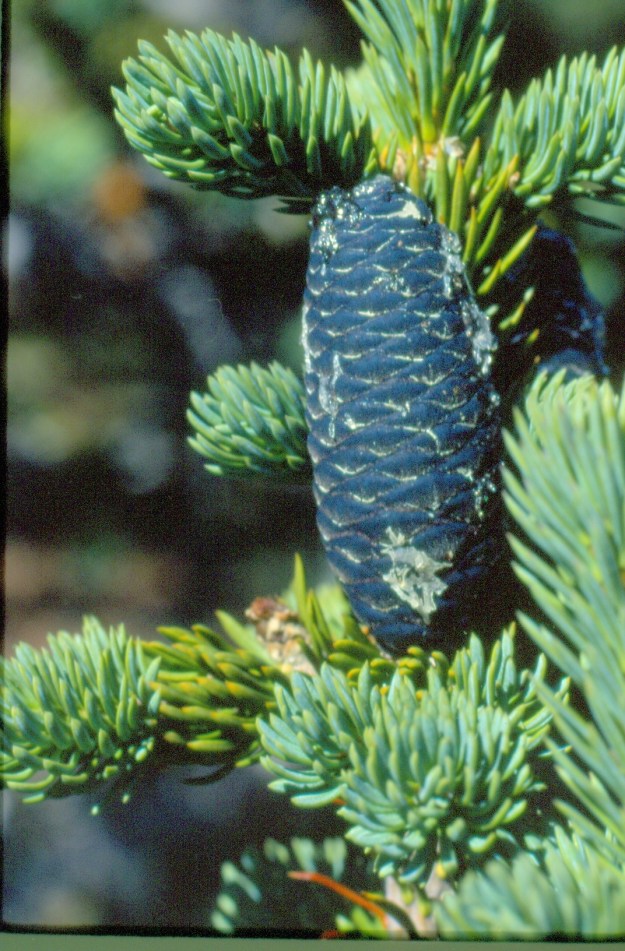
Subalpine fir showing upright immature seed cones. Cardinal Divide, 1995-09-03, P. Cotterill. 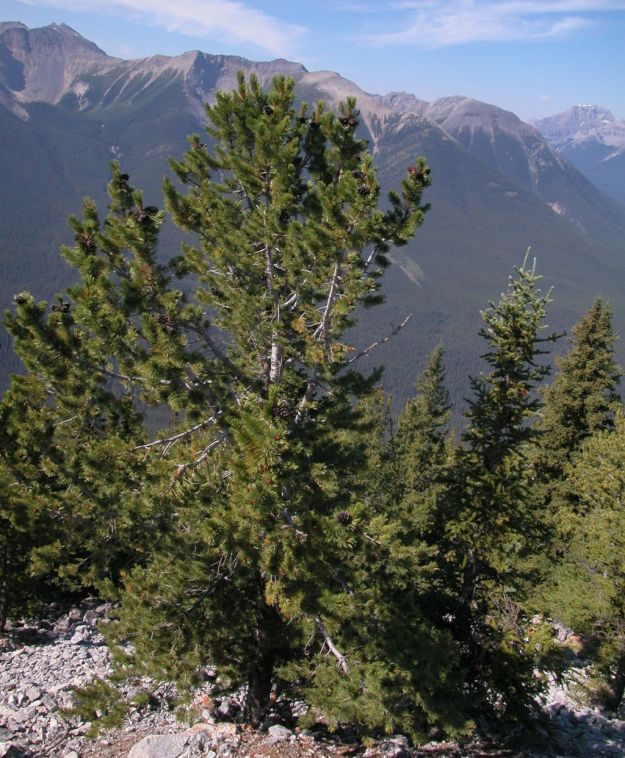
Whitebark pine. (Southern AB, exact location non known), 2004-08-13, D. Vujnovic. 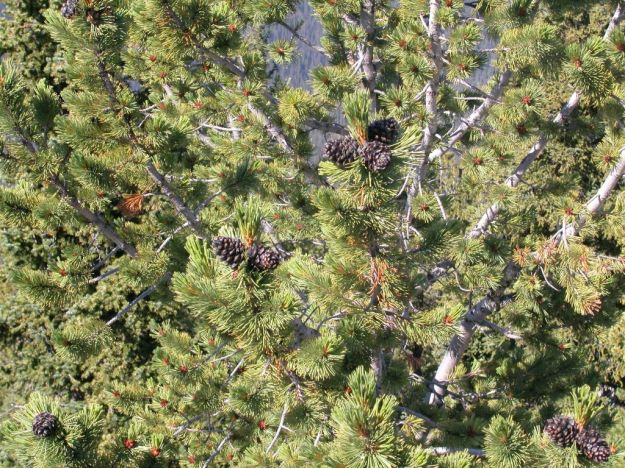
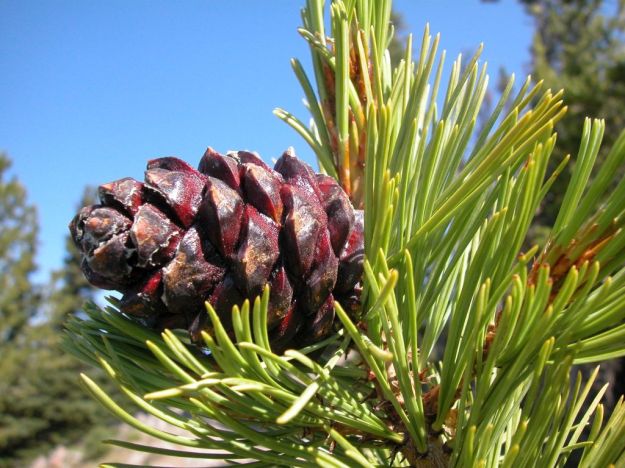
Whitebark pine showing bark, foliage and seed cones. (Southern AB, exact location non known), 2004-08-13, D. Vujnovic. 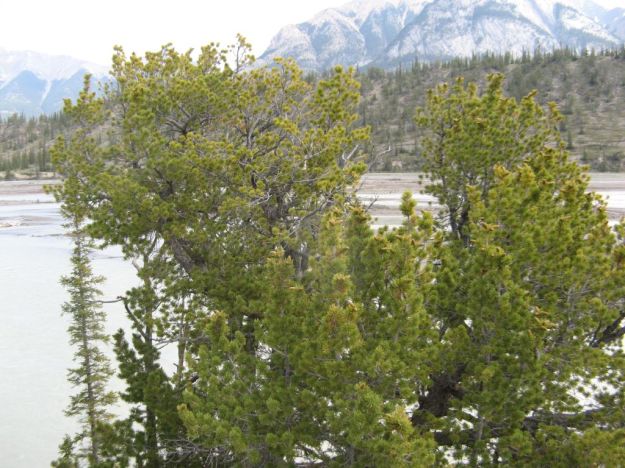
Limber pine with cones. Kootenay Plains, 2010-06-22, P. Cotterill. 
Open-grown white spruce showing pyramidal shape. Halfmoon Lake Natural Area, 2022-09-10, P. Cotterill. 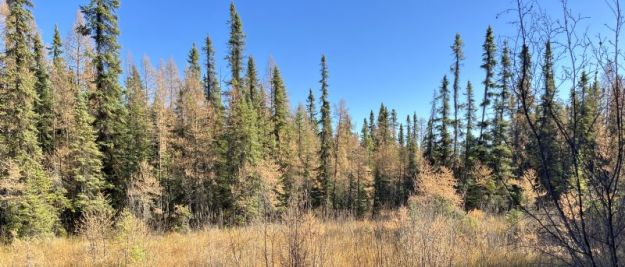
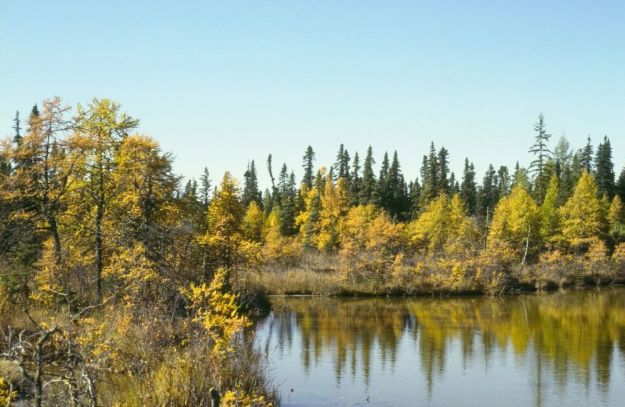
View of a fen in Wagner Natural Area with the thin, cylindrical forms of black spruce in the background. The shorter, pale-yellow trees are tamarack. 2023-10-20, P. Cotterill. Rocky Mountain Douglas-firs. Valley of the Five Lakes, Jasper National Park, 2024-06-24, P. Cotterill. 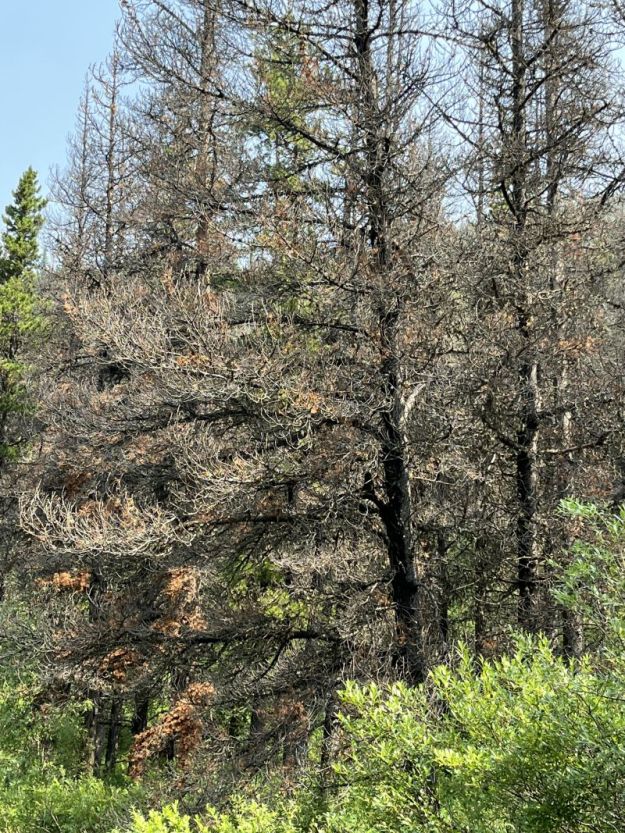
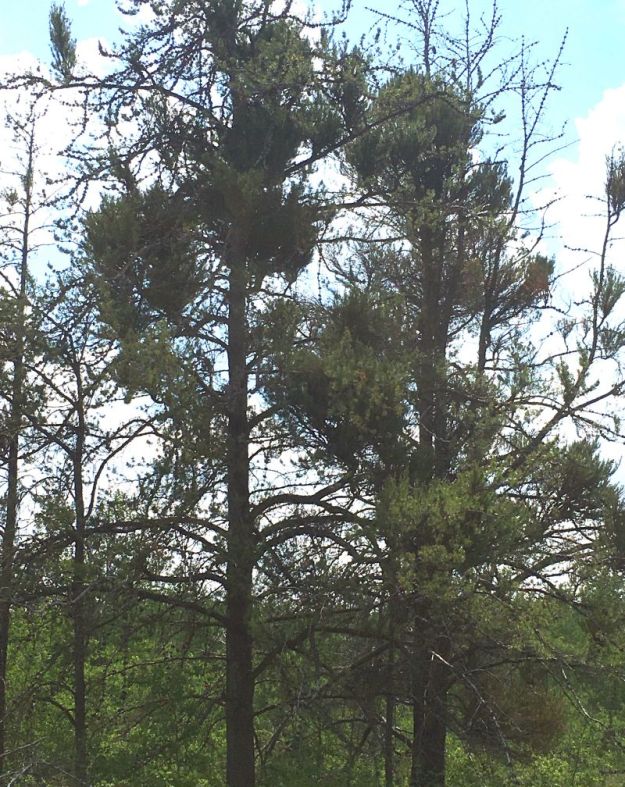
Dead lodgepole pines (likely killed by mountain pine beetle), Whitehorse Wildland Park, 2023-07-16, P. Cotterill 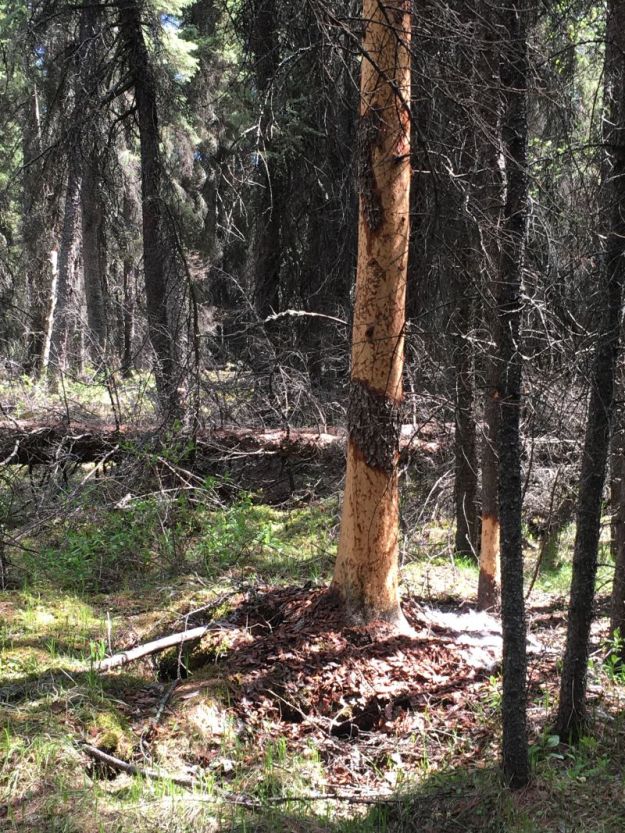
Mature tamarack killed by bark ringing by porcupines. Wagner Natural Area, 2022-05-28, P. Cotterill. 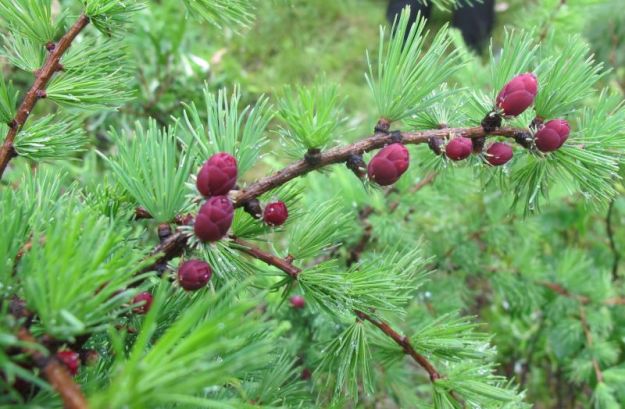
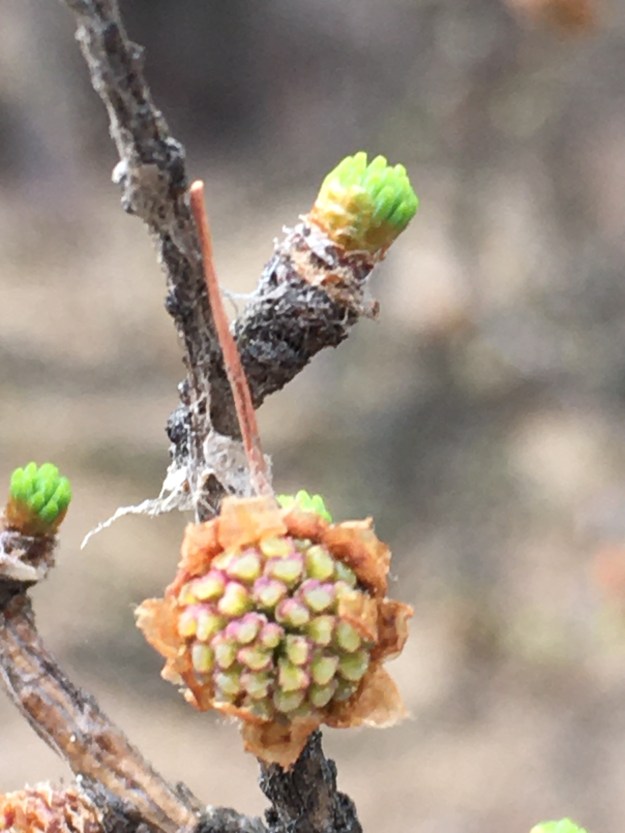
Leaves and immature seed cones of tamarack. Tucker Lake near Bonnyville, 2011-06-18, P. Cotterill.
 SAPAA
SAPAA 