Report on discussions with the Alberta Government and a definition of SAPAA 2.0. A field trip on April 14, lots of partner activities, and we say good bye to long-time steward Pat Clayton. This newsletter can also be downloaded in pdf.

- Editorial
- First Discussion: A Community Based Stewardship Program
- April 14 Student (and Friends) Site Visit
- Happenings In And Around SAPAA
- The Curious Case of the Northern Pitcher Plant and the Predatory Wyeomyia smithii Mosquito
- Published Site Inspections Since Last Newsletter
- Membership
- Editorial Team, Links and Resources at a Glance:
- A Few Bonus Pictures!
Editorial
by Patsy Cotterill
Year of Drought? We are compiling this newsletter at Easter and with the spring equinox already behind us, anticipating the upcoming growing season both with pleasure and some trepidation, given the forecasts of another year of heat and drought that may impact our sites and our ability to function as stewards. Check our next newsletter and watch the website for information on upcoming summer events.
AVS? In this issue SAPAA V-P and webmaster Frank Potter describes the progress the SAPAA board has made since our last newsletter in our efforts to secure a sustainable future for an organization of volunteer stewards in Alberta (which we are calling Alberta Volunteer Stewards or AVS). This has evolved from considering a merger to involving a consortium of partners with which to build and later operate the program.
Students. We have reached out for help in this future scenario to two University of Alberta student groups enrolled in Community Service-Learning programs. Engaged in disparate projects, the computer science group is developing an app for easier site inspection reporting, and the sociology group is looking at how similar volunteer organizations may function, assisting us with our strategic planning (see the notes from a Townhall Meeting organized for this latter group’s benefit). We will be meeting these students in person on a field trip, April 14 to Halfmoon Lake and nearby Protected Areas.
For our Science Fix, we look at a strange mosquito that may or may not exist in our fen natural areas in Alberta, alerted to this interesting narrative by one of our members, Jerry Shaw.
As always, we invite photos, comments and contributions from our members/ readers.
SAPAA March 6, 2024 – Townhall Meeting
In support of University of Alberta student projects, SAPAA held an online townhall meeting. Nine stewards attended to discuss SAPAA issues, and concluded that SAPAA remains relevant and useful to them, although there is room for change. It allows sharing of knowledge and information and provides mutual support. Some relevant messages for both the student group and the government were as follows:
- Tony believes its existence demonstrates to the government that protected areas are important and cared about and likes the sense of community SAPAA provides.
- Claudia appreciates the newsletter.
- Myrna would like to see more stewards, and more of them communicating via social media, such as Facebook and Instagram.
- Bertha regrets the absence of government-organized conferences of the earlier years and would like to see more communal events and car-pooling, providing opportunities to see different protected areas.
- Alan explained how BLESS has devised a system using QR codes to record trail usage and sightings at Lois Hole Big Lake Provincial Park.
The group also discussed ideas to increase the number of volunteers and provide them with a worthwhile volunteer experience. Flexible volunteering opportunities are important to appeal to a wider demographic than just the environmental community. SAPAA can thrive with a greater presence on social media, education and programming.
First Discussion: A Community Based Stewardship Program
by Frank Potter
The following is a summary of a Post, of the same title, documenting the results of recent meetings with the Government of Alberta and potential partners in an initiative called the Alberta Volunteer Stewards.
So, What is SAPAA 2.0 (and Who is AVS)?
SAPAA 2.0 has been a catch-all term and poorly defined. In a March 2024 meeting, SAPAA proposed a consortium of organizations resulting in Alberta Volunteer Stewards (AVS).
“AVS is a volunteer organization or program which connects and supports individual and organizational Stewards who monitor and care for protected areas covered by the Wilderness Areas, Ecological Reserves, Natural Areas, and Heritage Rangelands Act (WAERNAHR) within Alberta.
Stewards venture out and are supported by a robust safety program. In the field, they collect relevant and useful data that informs public policy and scientific research and perform permitted management activities.”
— Proposed Vision Statement: Alberta Volunteer Stewards
For the moment AVS is a thought-exercise to better understand the effort to take over Alberta Government program. The AVS Vision Star diagram represents these efforts and guides the organization.
1) Protected Areas: why AVS exists
2) Safe and Trained Stewards: designated AVS Stewards, partner organizations, and government officials
3) Allowed Usages for an Area.
4) Management of Knowledge: in- and outflow of knowledge to the other compass points.
5) Monitoring and Reporting: Trust but Verify the condition and usage of the protected areas; open data supports public policy, public knowledge, and research.

Four Strengths and Roles
A concept paper formed the basis for the March 2024 meeting. It was attended by four organizations. Each organization who each brought unique skills and resources to the table:
- Stewards of Alberta’s Protected Areas (SAPAA) brings corporate knowledge, history, and an existing membership base passionate about stewardship.
- Canadian Birkebeiner Society (Birkie) has a 40-year history of running a complex ski event which focuses on safety, working with partners, and the Alberta Government.
- Nature Alberta has experience managing disparate organizations and volunteers who conduct citizen science in the field.
- The Alberta Government is the landowner and trustee of the protected areas. They also currently bear the risk of a lack of a Safety program for existing Protected Area Stewards.
Cost and What Happened
SAPAA, Nature Alberta, and the Birkie were interested in the idea and expressed interest in future involvement. Unfortunately, non-profits are knowledge- and enthusiasm-rich but cash-poor. To take on the former government Volunteer Stewardship program, the non-profit consortium partners would require the immediate and long-term policy and financial support of the provincial government. An initial costing exercise determined that creating the above program would require about $500,000 over two years and about $300,000 per annum to run.
While the Alberta Government staff members were helpful, supportive, and frank, the funding commitments were well and above something they would be willing to propose within the Ministries with a reasonable chance of success. Further development of the program was recommended.
AVS, SAPAA 2.0 or How to Build a Good Idea?
Taking a very long-term view, the discussions in March solidified what a future program (called AVS, SAPAA 2.0, or something else) would look like. It would have the following features mapped to the five compass elements:
1) Protected Areas
- Updated and maintained website and online descriptions of the protected areas.
- Technical descriptions of the area such as geo-locations, geography, natural features, or sub-regions.
- Safety notes for the area such as the nearest first responders in case of an emergency (medical, fire, conflict, etc.).
- Human history of the site’s creation, connections to First Nation traditions, subsequent human usage for the site and nearby areas.
- Other relevant or interesting details for nearby residents, visitors, or tourists.
2) Safe and Trained Stewards
- OHS compliance, safety, and emergency response planning for volunteers (or visitors in distress) are incorporated into the program.
- Stewards will bring education, experience, and personal interests to the program.
- Stewards can attain higher levels of knowledge or proficiencies within different technical areas such as natural sciences, technology, visitor management, or education.
- Volunteers can interact with the program at different levels of engagement and are encouraged to remain engaged through community and gamification.
3) What is Allowed for an Area
- Working with government officials, stewards assist in communicating allowable, discouraged, and dis-allowed activities within a protected area.
- Assist through the organization’s website, phone-applications, etc., the communication of these activities to the public.
- Educate residents, visitors, etc., of the reasons for these uses, the impact of improper use, and the cost and efforts of remediation.
4) Management of Knowledge
- Create the systems, processes, and technologies to capture, transform, store, transfer, apply data and information generated by the program.
- Protect confidential information (e.g., volunteer details, local landowner contacts).
- Take a digital first approach to the acquisition and management of technology related to the protected areas, volunteers, science, and research data.
- Develop volunteer and public information material and delivery to explain the history, usage, and state of the protected areas.
5) Monitoring and Reporting
- Gathering protected area status through a variety of means, for example:
- Active monitoring through standardized site inspections, plant, and animal counts.
- Passive monitoring through trail cameras, remote imaging, public reports.
- Indirect measurement such as car or human traffic counts of in/egresses.
- Gathering both natural and human details such as:
- Native plant and fauna counts
- Invasive plant or animal infestations
- Depth and extent of human-created trails
- Illegal activities within an area (e.g., dumping, encampments)
- Preparing real-time and periodic reports on the above activities. Provision to the public, Minister(s), and interested parties’ analysis.
- Provision of information to bona fide researchers, volunteers, and members of the public the open data for the above.
Where to From Here?
The board is considering ways to implement some of the above suggestions immediately and within the available resources. For example, the first field trip of the season is the next article in this newsletter!
April 14 Student (and Friends) Site Visit
by Frank Potter
University of Alberta runs an innovative social enterprise known as the Community Service Learning (CSL). In the context of a university course, CSL students can gain work experience and make a difference with a local community group. Partnerships provide opportunities to contribute and increase their awareness of the social, economic, and political life of their community.
Computers & Strategy. Since January, SAPAA has been working with two such groups to build a prototype of a smart-phone application for site inspections and to help SAPAA with its strategic planning. Both projects will help us understand what SAPAA 2.0 may look like in the future. Stay tuned for results and details over the coming months.
Field Trip! The groups are winding down and have done great work on their respective projects. These projects are a two-way street in which SAPAA benefits from their recent program of study and they gain by putting that learning into action. To ‘sweeten the pot’, SAPAA also promised them a field trip!
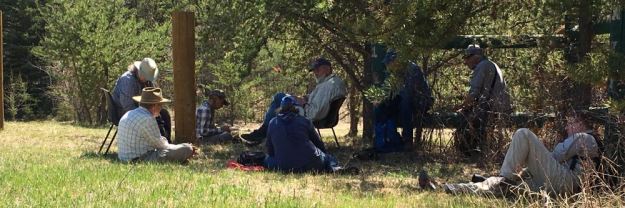
The deSmets and More. On April 14, we will head north of Edmonton to visit Richard and Vera at Halfmoon Lake Natural Area. There are three objectives for the field trip:
- Field Trip. This trip will inform, and perhaps, inspire these young adults to visit the areas and join SAPAA!
- Field Observation. The sites selected run the gamut of undisturbed, disturbed, and curated. This will give the students a sense of the challenges for management of protected areas and the ‘tragedy of the commons.‘
- Field Test. Hopefully the phone application, one of the project deliverables, will be in a sufficient state of development so that it can be field-tested by multiple individuals. Fingers crossed!
RSVP By April 12. To read more, register, and electronically sign the waiver, visit 2024-04-14: SAPAA & UofA Field Trip.
Happenings In And Around SAPAA
Welcome Dave Morden
Welcome back to Dave Morden, Steward for Telfordville (PNT) Natural Area, who has resumed duties as a steward! We were pleased to hear from him.
Wagner Natural Area Society, Annual General Meeting 2024
- Saturday April 13, from 1 p.m. to 3 p.m.
- Where: Percy Page Centre, 11759 Groat Road, Edmonton. Access through the back door (south side of building).
- Who: Members of Wagner Natural Area Society and friends, volunteers and associates. Please register at info@wagnerfen.ca.
- Refreshments and networking following the meeting.
- What: Brief business meeting and election, followed by a presentation from our guest speaker.
- Guest Speaker from Project Forest, Mike Toffan, will show how “Rewilding” may help restore ecological function to disturbed landscapes. Learn how Project Forest works with partners to meet mutual objectives and contribute to national environmental programs. Case examples come from Alberta, including near the Capital Region.
Nature Alberta Events for April
2024 ANPC Workshop – “Native Plant Superheroes”
- Saturday, April 20 online & in-person, Alberta Native Plant Council.
- 34th Annual ANPC Workshop held at Medicine Hat College with an option to participate online.
- The native plant workshop will include vendors displaying and selling native plant-themed items and a field trip is planned for the following Sunday morning.
- More info: naturealberta.ca/2024-anpc-workshop.
Snow Goose Festival
- Saturday, April 27 & Sunday, April 28 in Tofield
- Come celebrate the spring migration of snow geese near Tofield, southeast of Edmonton.
- The festival includes guided hikes, bus tours of the countryside, and a free Trade Show with Nature Alberta’s Nature Kids’ craft station, concession, speakers, and a Saturday banquet.
- More info: naturealberta.ca/snow-goose-festival.
Alberta Wilderness Association Events
Check the AWA Website for up-to-date information and to register: https://albertawilderness.ca/events/
April 21, Earth Day Photo Contest + BBQ in Calgary
- Join Alberta Wilderness Association for an Earth Day barbeque at our Calgary office in Kensington.
- We’ll eat, mingle and hear from Alberta nature photographer Nick Carter, a writer, photographer, and naturalist from Edmonton.
May 5, Spring Ramble in Fish Creek (In collaboration with Jane’s Walk)
- May 5, 2024, 6 p.m.
- Hosted by staff from AWA, a chance to experience Fish Creek Provincial Park with all your senses!
- Fish Creek Provincial Park is an important protected area within the vast urban landscape of Calgary.
- We will slow down and notice the plants and animals returning or waking up after the winter.
- The wetlands along the creek provide important habitat for many birds and animals, as well as storing and cleaning the water in Fish Creek.
- Learn more from AWA Conservation Specialist Phillip Meinzter.
May 11, Spring flowers on Tote Road
- May 11, 2024, 1 p.m.
- Join Benchlands resident Heinz Unger on a ramble through their rural neighbourhood west of Calgary, which includes wetlands, old-growth forest and amazing views of the mountains.
- Discover this hidden gem that few people get the chance to visit.
- Heinz will discuss the importance of sustainable grazing on our public lands.
Highwood Reflections – June 22, all day
- Join artist Carolyn Fisher and AWA Conservation Specialist Kennedy Halvorson along the Highwood River to learn about the logging that has currently been put on pause by West Fraser Cochrane.
- Participants will have a chance for guided reflections, either through sketching or journaling, on the beauty of this area under threat.
Pat Clayton, Naturalist and Conservationist, 1932-2023
by Patsy Cotterill
On October 29, 2023, the local community of naturalists and conservationists lost one of its dedicated members with the death of Pat Clayton at 91 years of age. Since her arrival in Canada in the early 1950s she and her husband Dick had pursued their interest in nature which, like that of many another naturalist, soon extended into working for the conservation of natural habitats and wild species. One memory I have of Pat is of her excitement when, after attending a meeting, she found out that a tool called conservation easements could be used to protect valuable natural property.
I first came across Pat and Dick in connection with the Edmonton Natural History Club (before its amalgamation with the Edmonton Bird Club to form the Edmonton Nature Club) soon after I arrived in Edmonton in 1981. Not one to seek the limelight, but always willing to fill a breach, Pat became the interim president of the club for 1981, when it had entered a period of doldrums. (The sort many clubs go through before they experience a revival.)
It is with Wagner Natural Area and Wagner Natural Area Society that I chiefly associate Pat, however. She was instrumental in forming the Wagner Society in 1982, although she subsequently stepped away for a few years owing to the pressure of her work in parks and recreational administration for the City of Edmonton.
Wagner NA was facing a huge threat from the development of Highway 16 at the time and needed a strong advocacy group with public support to push back and negotiate for its integrity. Pat later rejoined the Society and became an active member of the board, serving as director and president over the years, with many meetings hosted in Pat and Dick’s pleasant basement in Griesbach.
I co-served on the board with Pat for several years; although I did not always see eye to eye with her about how to deal with management of Wagner or Parkland County politics, there was no doubt of her dedication to the welfare of the Natural Area. Both Pat and Dick were also field people, with Dick being Wagner’s handyman, who along with Irl Miller attended to trail infrastructure such as fixing the boardwalk and the trail signposts, as well as looking after birdboxes.
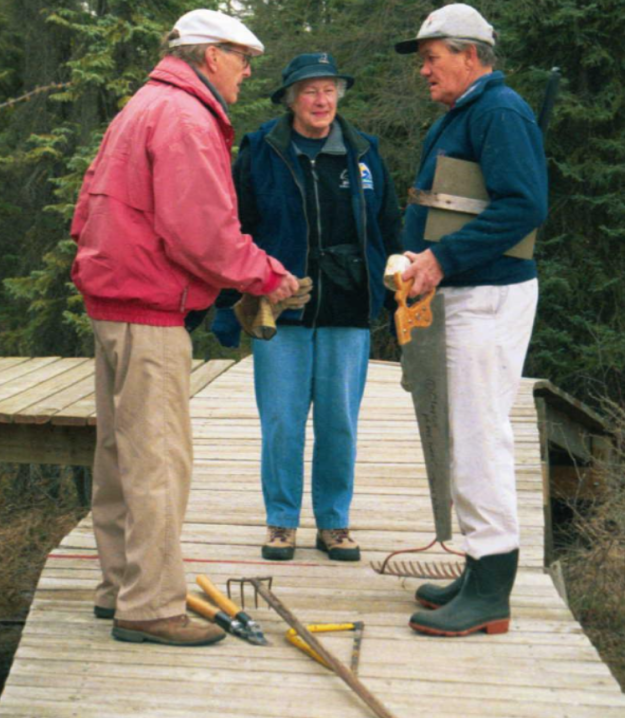
Pat participated in weed pulls and other field chores and was a hard-working organizer and participant on many a cold spring or fall clean-up day. She was a competent caterer and her basket of goodies, with her signature cheese scones, was always eagerly consumed when the chores were done.
Irl Miller, Pat and Dick consulting on the Wagner Marl Pond Trail boardwalk. Date not recorded. Photo: P. Cotterill
Pat was also a member of the Federation of Alberta Naturalists/Nature Alberta and in 2004 she received an Honorary Life Membership Award from Nature Alberta. Pat’s volunteerism was recognized in various ways, with the provincial government’s Volunteer Appreciation Award, a Wagner recognition award and in 2003 the Alberta Emerald Award for individual contributions to the environment. She was a member of and a generous contributor to SAPAA.
Pat was active as an environmental volunteer until the end. She leaves, besides her family, including Dick, a host of friends and their memories.
The Curious Case of the Northern Pitcher Plant and the Predatory Wyeomyia smithii Mosquito
by Patsy Cotterill
Wyeomyia smithii, the purple pitcher plant mosquito
SAPAA member Jerry Shaw recently alerted me to the existence of the Wyeomyia smithii mosquito which he had heard of during graduate studies in the eastern US. This mosquito spends all its larval life in the water-filled, pitcher-like leaves of the northern or purple pitcher plant (Sarracenia purpurea), and even the adults do not fly far from their natal plants. These little water pools contained within the plant’s “pitchers” or bladders are nothing less than communities, a soup of bacteria, protozoans, midges, and detritus from drowned insects, on which Wyeomyia feeds, without itself being consumed by the carnivorous pitcher plant.
Northern or Purple Pitcher Plants
Purple pitcher plants are denizens of fens and peat bogs, where carnivory is a means of supplementing a diet low in nitrogen, and occur along the eastern seaboard, the Great Lakes, the Gulf of Mexico, and across Canada. In Alberta, they are rare enough to merit the conservation status of Vulnerable, confined to only a few locations in the northeast. The most southerly location for populations in Alberta is Clyde Fen Natural Area, about 100 km north of Edmonton. Given the association between the purple pitcher plant and Wyeomyia smithii, Jerry’s question was simple: has anyone sampled for this mosquito at Clyde Fen, and if not, why not do so?
A non-biting mosquito with an unusual habitat!
A quick check of the Internet reveals that Wyeomyia smithii is in fact quite famous, (although not enough apparently to have a common name!) and has been the subject of considerable research. Its life cycle is well known. Adults in populations in the north of its range do not bite and subsist on nectar or larval food stores. In southern populations females may sometimes seek a blood meal which enables them to lay a second batch of eggs. The mosquito breeds twice yearly, in spring and fall, and it is speculated that females choose young pitcher leaves in which to lay their eggs.
Daylength is an important determiner of life cycle phases in northern populations.
Eggs laid in fall will overwinter as larvae in a dormant state known as diapause when water in the pitcher is frozen, although they will also become dormant if the water dries up. Populations in their northern range depend upon a genetically controlled response to daylength (photoperiod) to know when to enter hibernation, and when to end it and start or resume development. Daylengths vary dramatically in northern latitudes compared with lower ones and northern populations can be assumed to have adapted to enter diapause when the days are still long, but temperatures are lower.
Evolutionary response to climate warming
The daylength (or critical photoperiod) at which entry into diapause occurs was studied by researchers William E. Bradshaw and Christina M. Holzapfel who compared data from laboratory-raised northern pitcher plants and Wyeomyia smithii populations from earlier and later years. They found, for example, that at 50o N latitude, larvae from 1972 had a critical photoperiod of 15.79 hours, but 1996 larvae responded when the daylength was only 15.19 hours, which corresponded to entering diapause nine days later. The authors conclude that this mosquito species has made a rapid evolutionary change to become capable of responding genetically to a shorter daylength, with climate warming exerting the selection effect. Individuals capable of making the shift are being selected for. (Delaying diapause allows for longer feeding and development time and confers a fitness advantage.) Thus, this mosquito has become something of a poster child for rapid evolutionary change.
A keystone species?
According to the Animal Diversity Web, operated by the University of Michigan’s Museum of Zoology, Wyeomyia smithii is also something of a keystone species. The idea is that as the major predator controlling the ecosystem within the leaf pitcher it reduces the population of protozoans; this increases bacterial abundance and diversity which in turn increases decomposition rates and hence nutrient availability. This may be the chief benefit it provides to the pitcher plant, as it is not the plant’s prey. Without an obvious benefit to the plant (although the mosquito receives food, shelter and nursery space from its interior aquatic habitat) the relationship is so far being considered one of commensalism (eating “at the same table”) rather than symbiosis.
In my online searches I came across this interesting statement on the Animal Diversity Web: “This species has no special conservation status but is used as an example to defend mosquitoes across the globe as it has great impact within its ecosystem” (Fang, 2010). Personally, I’ve always believed that mosquitoes have an important ecosystem function in keeping humans, the most destructive predators, out of natural spaces. This, and the high-water levels found in many mosquito habitats!
The situation at Clyde Fen Natural Area

To ascertain whether any sampling of Clyde Fen Natural Area‘s pitcher plants’ fluids has been done I consulted two local experts: Derek Johnson, botanist, and steward of Clyde Fen NA for over three decades, and Mike Jenkins, senior entomologist in the City of Edmonton’s Pest Management Lab and Operations.
Rosette of pitcher plant leaves in fen moss, Clyde Fen NA, 2023-09-15, P. Cotterill
Derek had investigated pitcher contents and found miscellaneous insects but could not confirm the presence of Wyeomyia; he noted, however, the pH of the fluid was more acidic than the water of the surrounding fen. Mike had sampled the waters several years ago using various sampling techniques and found no Wyeomyia. The question becomes, why? Organisms tend to have an uncanny way of finding the right habitat, even when such habitats are widely diffused geographically; on the other hand, Clyde’s pitcher plants are very isolated, and this mosquito is not a great traveler. Mike thinks that it may just have been too cold for Wyeomyia to establish here.
Another question arises with respect to the welfare of pitcher plant populations at Clyde. Derek, who visits the site every year, feels that populations are gradually rebounding after a major fire in 2001. I still regret their loss when a portion of the fen was converted to agriculture with disastrous results years ago.
Bottom line for Jerry: would it be appropriate to conduct another sampling for Wyeomyia smithii and indeed its pitcher co-habitants? Mike is keen to do so, especially as climate warming may have changed the picture for Wyeomyia here. As for citizen science projects, the stewards could set up some sample plots for monitoring over the next few years, to get a good handle on how well its extraordinary fen flora, including all its carnivorous plant species and two rare orchids, is doing.
References
- Animal Diversity Web. https://animaldiversity.org/accounts/Wyeomyia_smithii/
- Bradshaw, William E., Christina. M. Holzapfel, 2001. Genetic shift in photoperiodic response correlated with global warming. PNAS, Vol. 98 (25): 14509-14511. https://www.pnas.org/doi/full/10.1073/pnas.241391498
- George (Jerry) Shaw. Email. Feb. 17, 2024.
- Derek Johnson and Mike Jenkins. Personal communications.
Published Site Inspections Since Last Newsletter
The following Site Inspection Reports help to describe the state of individual natural areas. They represent a visit by ONE steward, on ONE Day, and THEIR impressions of the site. The date value in the title is the date of the visit.
- 2023-06-08: Strawberry Creek (PNT)
- 2023-08-09: Welch Creek NA
- 2023-09-23: North Cooking Lake (OC)
- 2023-09-27: Telfordville NA
- 2023-10-01: Bridge Lake
- 2023-10-01: Nestow
- 2023-10-08: Wanisan Lake (PNT)
- 2023-10-08: Parkland
- 2024-03-09: Opal NA
Membership
Annual membership renewal remains at $15 per individual, family or group steward and includes a $5 insurance fee the society pays to Nature Alberta.
E-transfers are preferred (treasurer@sapaastewards.com) but if payment is made by cheque, it should be made payable to Stewards of Alberta’s Protected Areas Association (in full, the bank is persnickety) to c/o Patsy Cotterill, Membership Secretary, 7401 156 Street NW, Edmonton, AB T5R 1X4.
The membership year runs from October 1 to September 30. If you have changes to make to your information or wish to provide additional information, please provide updates by completing and emailing /mailing the Membership Form available on the Home Page.
Thank you.
Editorial Team, Links and Resources at a Glance:
Editorial team: Patsy Cotterill, Frank Potter, Hubert Taube.
- List of Alberta’s Protected Areas.
- Connect & Read.
- Online Steward Reporting form.
- New and Renewal of SAPAA Membership.
- SAPAA’s FaceBook Group.
- Land Reference Manual | Alberta Parks.
- This Newsletter can be downloaded in pdf.
A Few Bonus Pictures!
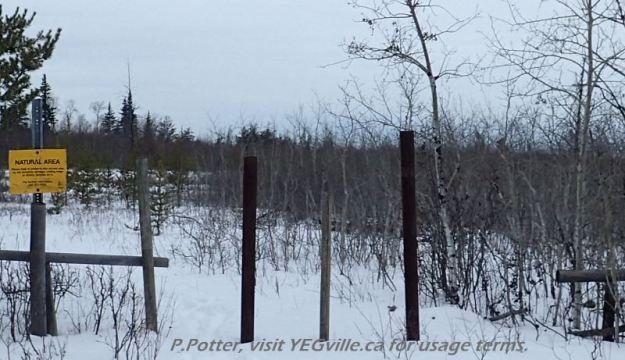
Southeast entrance, at the end of RR 225, to Opal NA, 2024-03-09, P. Potter. 
Looking northwest at the top of hill (SW Corner) of Bridge Lake NA, P. Potter, October 1, 2023. 
Looking north along the equivalent of RR 242, western border of Bridge Lake NA, P. Potter, October 1, 2023. 
Nestow NA., P. Potter, 2023-10-08. 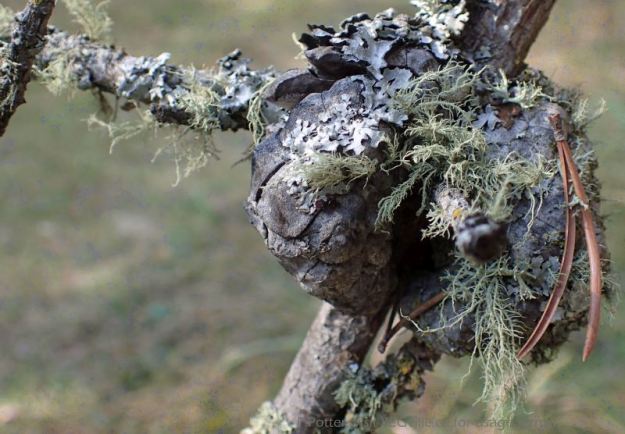
Nestow NA., P. Potter, 2023-10-08. 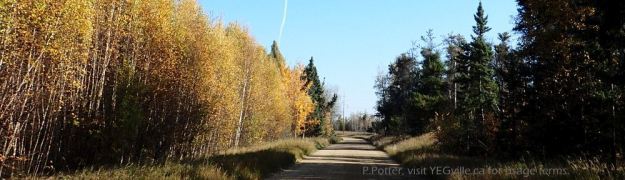
RR 245A heading north through Nestow NA., P. Potter, 2023-10-08.
 SAPAA
SAPAA 